
Clicker training is one of the easiest ways to teach a bird new behaviors, and it works for a budgie as well as a macaw. Buying the kit is where many owners go wrong. Listings are crowded with bundles, and many include extras your bird will never use while skipping the one or two parts that matter.
This guide covers the few features that decide whether a kit is worth buying. It then matches those features to small birds, medium parrots and large macaws, so you can order the “best clicker training kit for birds”
Why a clicker works so well with birds
A bird cannot understand “good job” said a second late. A clicker solves the timing problem. The click is a short, identical sound that marks the exact moment your bird does the right thing, and a treat follows. After a few repetitions the bird learns that the click means a reward is coming, so it repeats whatever it was doing when it heard the click.
Birds are well suited to this for three reasons:
- They are quick to notice consistent sounds and patterns.
- Most are highly food motivated, and a tiny treat is enough.
- They respond poorly to pressure, so a method that rewards good choices fits them better than one that corrects mistakes.
This is the reinforcement approach described in why I teach pet behavior through kindness, not correction. The clicker is the tool that makes it precise. Your voice, tone and mood change from day to day. The click sounds the same every time.
What a bird clicker kit should actually include
Most kits are built from the same four parts. Judge each one on how it will work for your bird, not on how the packaging looks.
The clicker itself
The click sound matters more than anything else in the box. Some clickers are sharp and loud, which suits a calm macaw but can startle a nervous budgie. Others have a softer click or a volume adjustment. Pressing it should take little effort, because you will often have a treat in one hand and a target stick in the other.
If your bird flinches at the sound, you have two options: muffle the clicker, for example by holding it in your pocket or pressing it against your leg, or use a quieter model. A short spoken word such as “yes” also works as a marker, as long as you say it the same way every time.
The target stick
A target stick is a rod with a ball or tip on the end. You teach your bird to touch the tip with its beak, then use the stick to guide it onto a perch, around a play stand, or through a turn. It lets you direct movement without using your hands, which is useful with a bird that is wary of fingers.
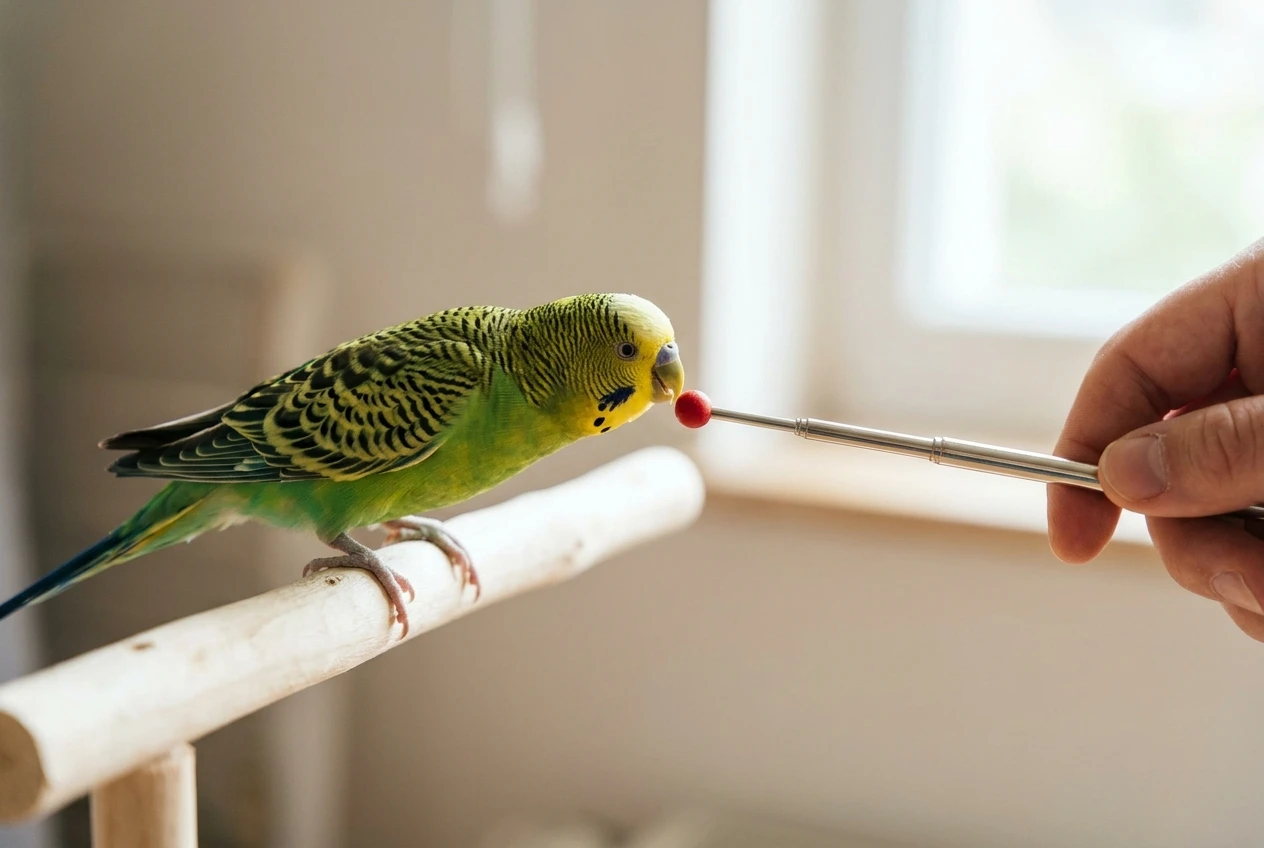
Look for a stick that is light enough for you to hold steady, long enough to keep your hand out of beak range, and a tip your bird can see clearly. Telescoping sticks are easy to store, but check that the sections lock in place, because a stick that collapses mid-session can frighten a bird.
The treat pouch
A pouch keeps treats within reach so you can reward within a second of the click. A delay of even a few seconds weakens the link between click and reward. A pouch that clips to a belt or waistband and opens one-handed is ideal. A pouch you have to unzip or fumble with is not.
Size and species fit
Kit parts are not interchangeable across bird sizes. A flimsy target stick will not hold up to a large macaw, and a heavy, bulky tip is awkward around a small finch or budgie. Treats and pouch openings also need to suit the food your bird actually eats. Check which birds the kit is designed for before you buy.
A short instruction guide is a useful extra, but only if it explains the click-then-treat sequence and target training. If it is mostly advertising, ignore it.
Matching the kit to your bird: small birds, medium parrots and large macaws
Small birds: budgies, cockatiels, lovebirds
Small birds need a light, short target stick and a clicker that is not too loud. They are easily startled, so a softer click is often the better choice. Their treats are very small, so a pouch with a narrow opening, or a small container, works well.
Because small birds finish sessions quickly, you do not need a heavy-duty kit. A basic clicker with a light target stick is enough.
Medium parrots: conures, caiques, Senegals, Amazons and similar
Medium parrots are strong, curious and often opinionated. They can chew through a thin plastic target stick in a single session if they get hold of it. A sturdier stick, with a tip that is hard to pull off, is a better choice. These birds also get bored quickly, so a pouch you can use fast matters, since delays give them time to lose interest.
If your bird has a history of nipping, read why do pet birds bite first. A target stick helps here, because it gives you a way to move the bird without putting your hand near its beak.
Large macaws and cockatoos
Large parrots can bend or snap a lightweight stick, and a hard bite on a thin target can hurt your hand if you hold it too close. Choose a solid, longer target stick, and a clicker that is loud enough for the bird to hear clearly across the room. A durable belt pouch is worth having, because large birds eat bigger treats and go through more of them in a session.
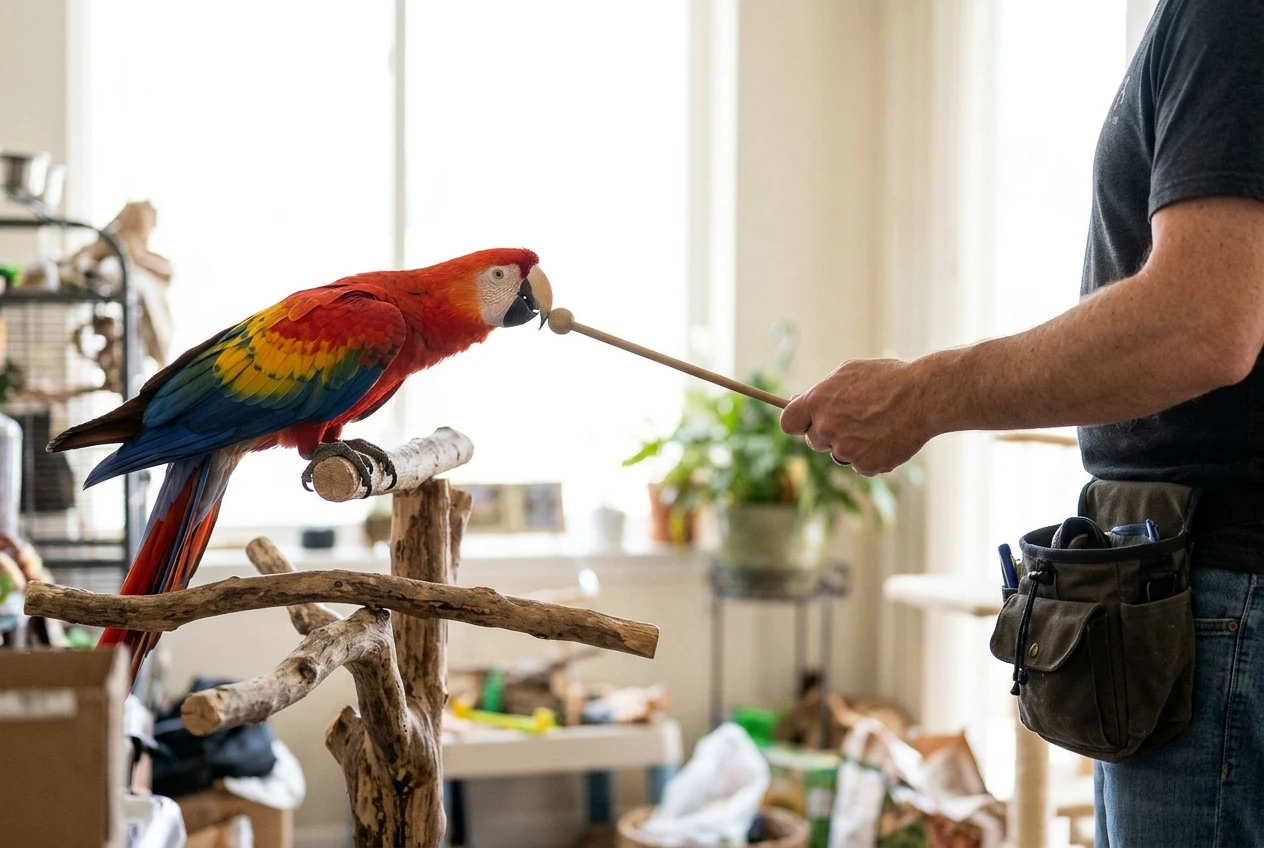
Large birds also benefit from training at a distance, so a longer stick gives you room to work safely.
Our top picks by type of bird and type of owner
Rather than naming individual products, which change in design and availability, these picks are kit types. Choose the one that fits your bird and your situation, then compare the specific listings against the features above.
- Starter click-and-target kit for budgies and cockatiels. A small clicker, a light target stick and a basic pouch. This is the best choice for a first-time owner with a small bird.
- All-in-one kit for medium parrots. A sturdier target stick, a clicker with a firm button and a belt pouch. It suits owners who want everything in a single purchase.
- Heavy-duty target and clicker for large macaws. A long, solid stick and a loud clicker. This is the right choice if your bird is strong and you want distance between your hand and its beak.
- Quiet clicker kit for sound-sensitive birds. A softer clicker, or a kit that includes a muffled one. This is for nervous birds or homes where loud clicks cause problems.
- Budget approach for owners who want to try it first. A basic clicker and a pouch you already own. You can use a wooden dowel or chopstick as a target stick until you know the method suits you and your bird.
If you have more than one bird, a basic kit for each size is usually better than one large kit shared between them.
Clicker, target stick or both: what to buy first
If you can buy only one item, buy the clicker. It teaches the core skill, and every other behavior is built on it. A clicker on its own is enough to teach recall, stepping up and stationing on a perch.
The target stick comes second. It is most useful when you want to move your bird without handling it, or when you plan to teach a behavior like spinning or going into a carrier. You can improvise a stick from a dowel, so it is less urgent.
For most owners, a kit that includes both is the better value, and it removes the need to shop twice. If your bird is shy or aggressive, buy both from the start, since the target stick will do much of the early work.
Treats and pouches that keep sessions short and fun
Treat quality affects results more than the brand of the clicker. A good training treat is small, fast to eat and something your bird likes more than its everyday food. If it takes your bird thirty seconds to crack a seed, the session loses rhythm.
Some practical points:
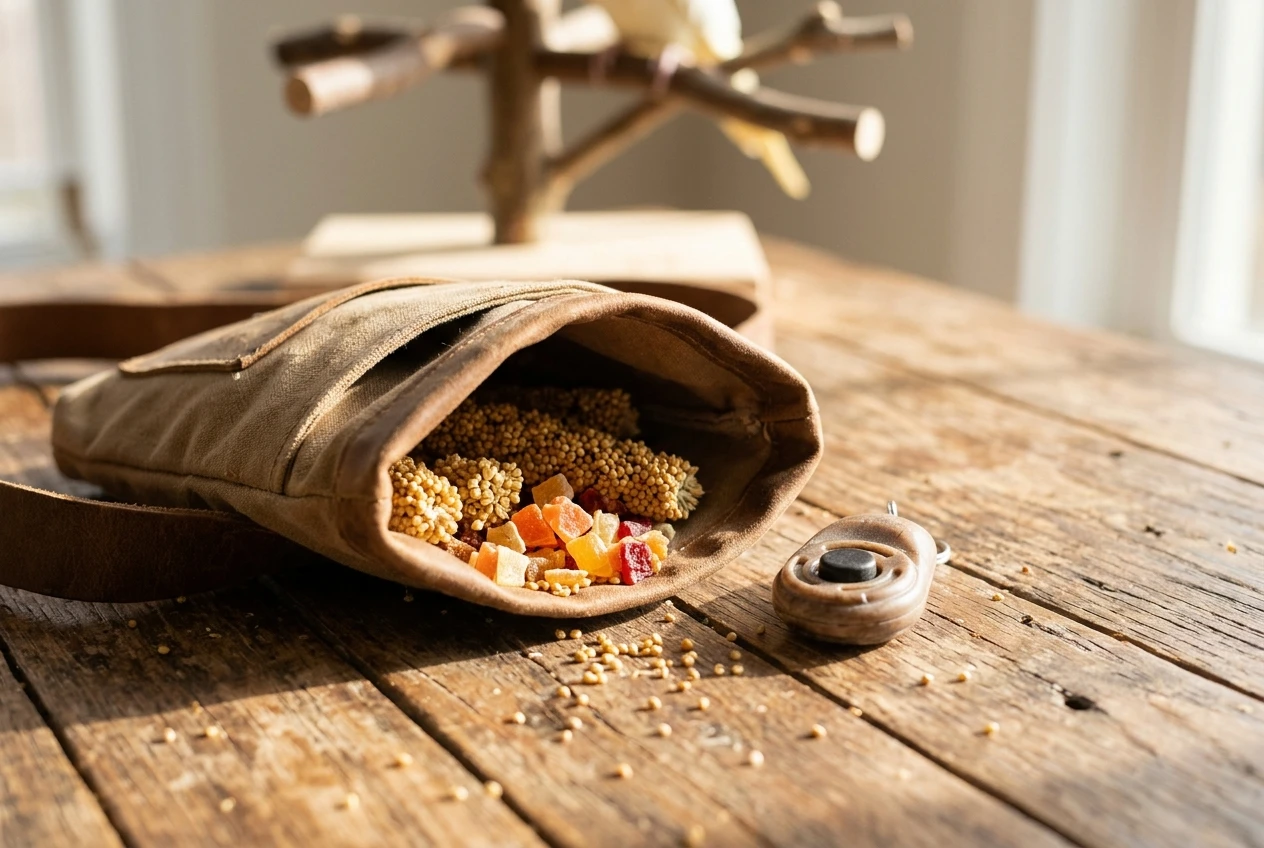
- Cut treats small enough to eat in one or two bites.
- Keep training treats separate from your bird’s regular food, so they stay special.
- Ask an avian vet which treats suit your species, and how many your bird can have in a day, because some favorites are high in fat.
- Use part of the daily food ration for training, so the treats do not add extra calories.
For the pouch, choose one that opens with one hand, closes securely and is easy to wipe clean. Keep it at the same spot on your body each session so you can reach it without looking.
Your first week with a new kit: three easy sessions
Keep every session to a few minutes, and finish while your bird is still interested.
Session one: charge the clicker. Click, then immediately give a treat. Repeat about ten times. You are not asking for any behavior yet. The goal is for your bird to link the sound with food. If it startles at the click, muffle the sound and try again.
Session two: touch the target. Hold the target stick near your bird’s beak. When it looks at or touches the tip, click and treat. Over several repetitions, only click when it actually touches. Move the stick a little farther away each round.
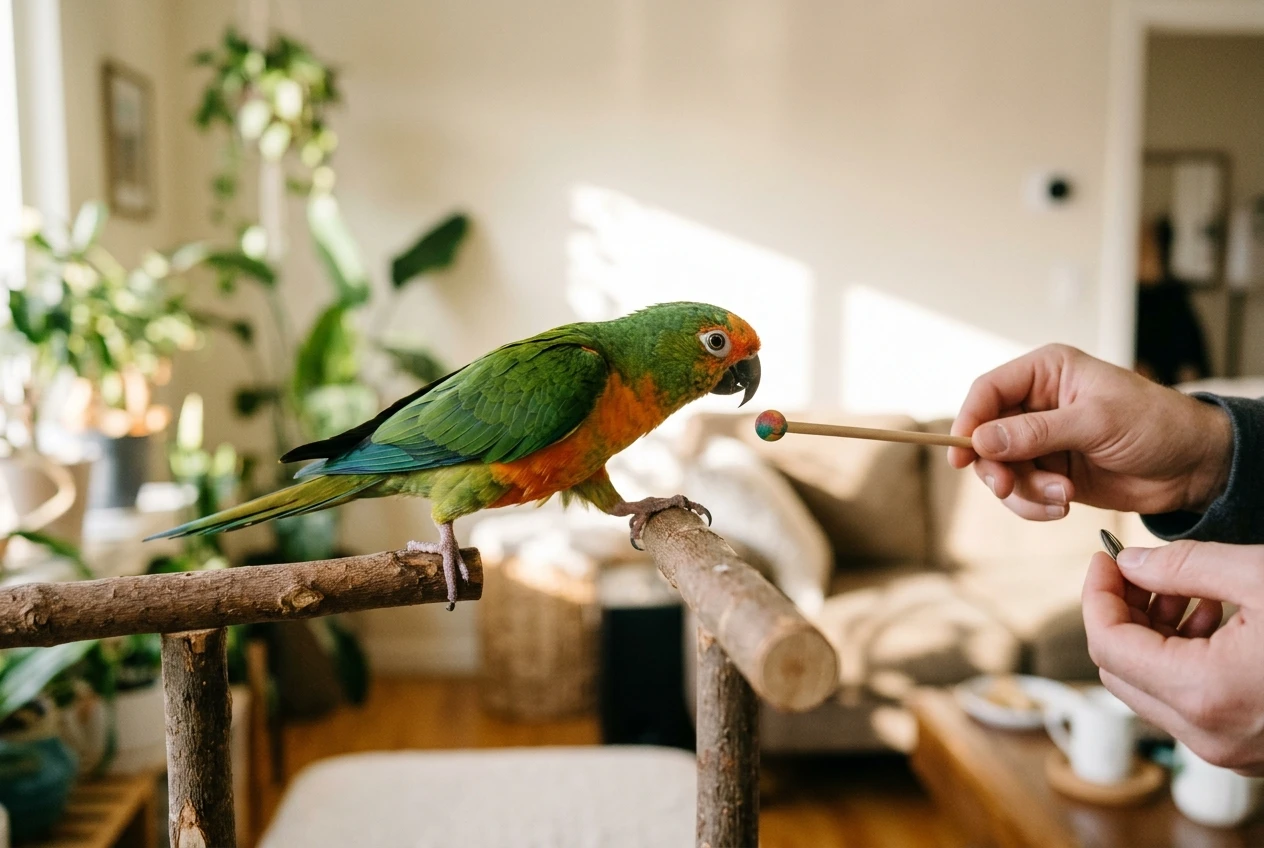
Session three: follow the target. Move the stick a short distance and click when your bird steps or turns toward it. Build slowly, from a single step to a few steps, then to a hop onto a nearby perch. End the session with an easy success.
For the wider picture of how these sessions fit into daily routines, the beginner guide to training your pet bird covers the basics of bonding and trust before formal training.
Mistakes that make birds ignore the clicker
Most problems come from a few causes that are simple to fix.
- Clicking without a treat. If the click does not reliably lead to food, it loses its meaning. Always treat after a click.
- Late timing. Click at the moment of the behavior, not a few seconds afterward.
- Sessions that run too long. Once a bird loses interest, it stops responding. Stop early, and try again later.
- A treat the bird does not value. If your bird takes the treat and drops it, find one it likes more.
- Using the click to call the bird. The click marks behavior. It is not a summons.
- Training a bird that is scared or unwell. A fearful, stressed or sick bird cannot learn well. If its behavior changes suddenly, check with an avian vet.
- A clicker that is too loud. If your bird retreats when it hears the click, switch to a quieter model or a spoken marker.
Sessions go best when you keep them calm, consistent and short, and when you reward quickly.
Ready to choose your kit?
Pick the kit type above that matches your bird’s size and temperament, then use the affiliate links beside the picks you like to compare the listings. If you buy through one of them, the site may earn a small commission at no extra cost to you. Please read the Affiliate Disclosure for the full details.
If you have not yet read the beginner guide to training your pet bird, start there. It covers the groundwork that makes your first clicker session go smoothly.