
Training a pet bird might sound complicated at first, but in reality, it’s one of the most rewarding parts of bird ownership. Birds are intelligent, curious, and eager to learn—when approached with patience and the right techniques.
Over time, I’ve come to see that training isn’t about control. It’s about communication, trust, and creating a safe, enjoyable environment where your bird feels confident and secure.
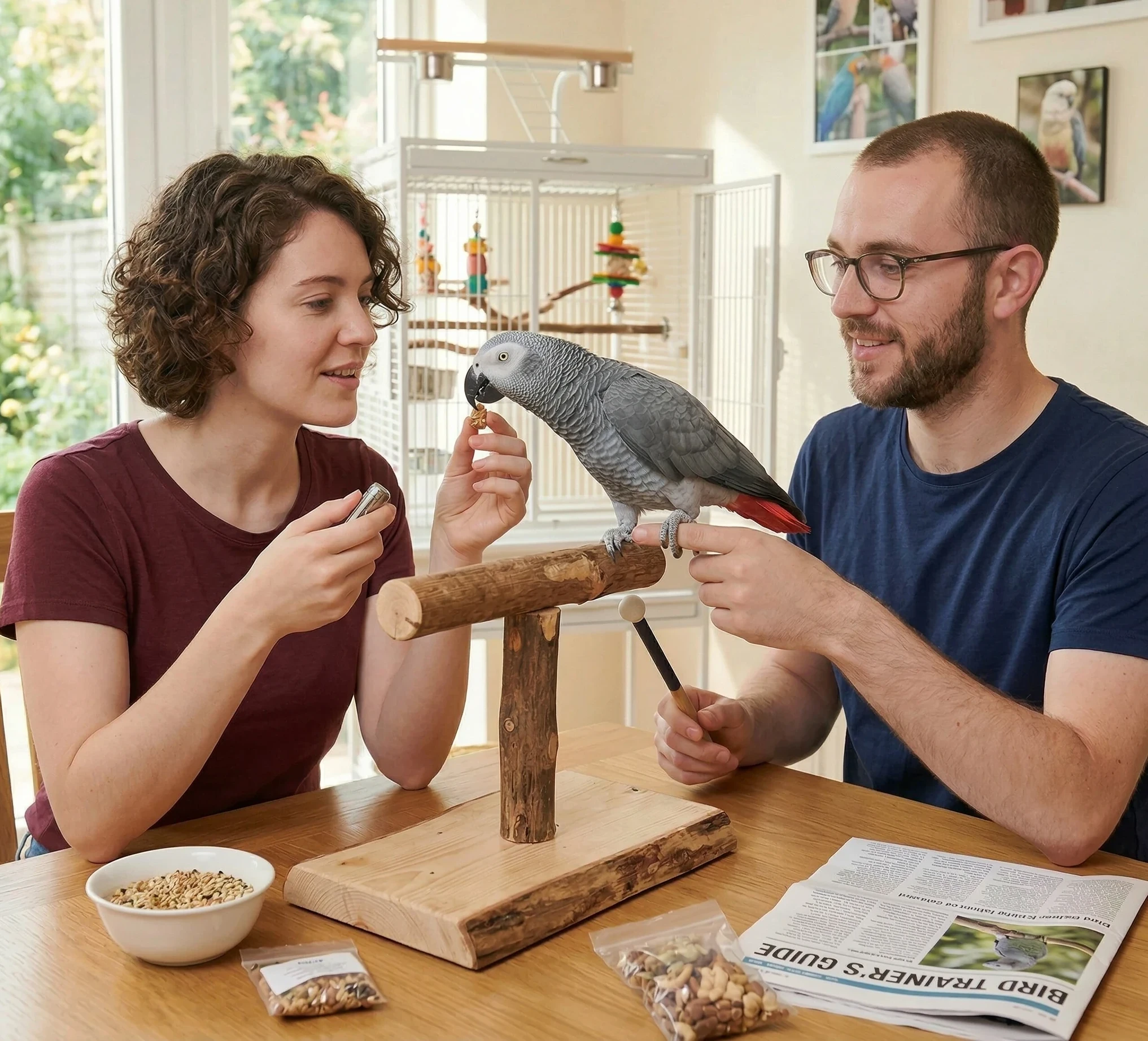
Whether you’re working with a small bird or a highly intelligent parrot, this guide will walk you through the essentials of bird training in a simple, practical way.
🧠 Why Training Your Bird Is Important
Training plays a much bigger role than most people realize.
A trained bird is:
- Easier to handle
- Safer in everyday situations
- More confident and less stressed
It also strengthens the bond between you and your bird, turning everyday interactions into something meaningful and enjoyable.
🪶 Understanding How Birds Learn
Before you begin training, it’s important to understand how birds think.
Birds learn through:
- Repetition
- Association
- Positive reinforcement
This means they respond best when good behavior is rewarded immediately. Punishment, on the other hand, can damage trust and slow down progress.
Keep sessions short, calm, and consistent.
🧰 What You Need Before You Start Training
Preparation makes a big difference.
Before starting, make sure you have:
- Small, healthy treats your bird enjoys
- A quiet, distraction-free space
- Patience and consistency
Training should always feel safe and positive for your bird.
✋ Step 1: The “Step-Up” Command
The “step-up” command is the foundation of bird training.
To teach this:
- Gently place your finger or hand near your bird’s chest
- Say “step up” clearly
- Reward immediately when your bird steps onto your hand
This simple command helps with handling, bonding, and daily care.
🪶 Step 2: Recall Training (Coming When Called)
Recall training teaches your bird to come to you when called.
Start with short distances:
- Call your bird calmly
- Offer a treat as encouragement
- Reward immediately when they respond
As your bird improves, gradually increase the distance.
This is especially useful for birds that spend time outside the cage.
🎯 Step 3: Target Training
Target training involves teaching your bird to touch a specific object (like a stick) with their beak.
This helps:
- Improve focus
- Guide movement
- Build confidence
It’s also a great way to introduce more advanced training later on.
🧠 Using Positive Reinforcement
Positive reinforcement is the most effective way to train a bird.
This means:
- Rewarding desired behavior
- Ignoring unwanted behavior (when possible)
- Staying calm and patient
Rewards can include treats, praise, or even attention—depending on what your bird enjoys most.
⏱️ How Long Should Training Sessions Be?
Short sessions work best.
Aim for:
- 5 to 10 minutes per session
- 1 to 2 sessions per day
Ending on a positive note keeps your bird motivated and eager to learn.
🚨 Common Bird Training Mistakes to Avoid
Training can go wrong if you’re not careful. Some common mistakes include:
- Rushing the process
- Using punishment
- Training in a noisy or stressful environment
- Being inconsistent
Patience is key. Progress may be slow at times, but consistency always pays off.
❤️ Building Trust Through Training
Training is one of the best ways to build trust with your bird.
When your bird feels safe and understood, they become more relaxed, responsive, and affectionate.
Trust grows through:
- Gentle handling
- Consistent routines
- Positive experiences
This is where training becomes more than just teaching—it becomes bonding.
🔗 How Training Fits Into Overall Bird Care
Training is just one part of keeping your bird happy and healthy.
To truly thrive, birds also need:
- Proper nutrition
- Mental stimulation
- A safe environment
🏁 Final Thoughts: Enjoy the Journey
Training your bird isn’t about perfection—it’s about progress.
Some days will go smoothly, others may feel challenging. That’s completely normal. What matters is consistency, patience, and enjoying the time you spend together.
With the right approach, training becomes one of the most rewarding parts of owning a bird—and a powerful way to strengthen your bond.