
By Tim – Whisker Wise Mind
Cats are naturally curious, playful animals. Whether they’re stalking an imaginary mouse across the living room or batting at a piece of string, play is far more than entertainment. It helps keep cats physically fit, mentally stimulated, and emotionally satisfied.
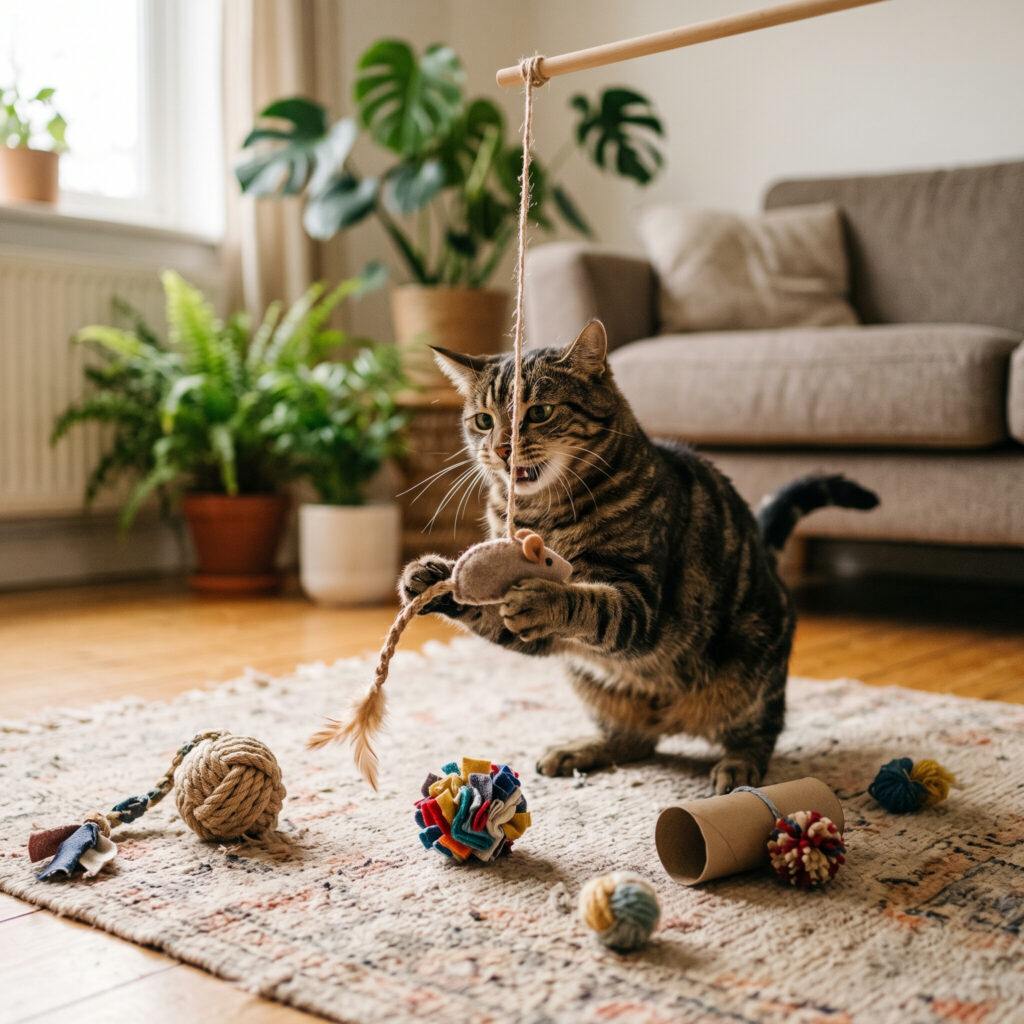
The good news is that keeping your cat entertained doesn’t have to be expensive. Many of the best toys can be made from everyday household items in just a few minutes.
In this guide, I’ll share some of my favourite DIY cat toy ideas, explain why they work, and show you how to keep playtime both fun and safe.
Why Homemade Cat Toys Are So Beneficial
Cats are born hunters. Even the most relaxed indoor cat still has powerful instincts to chase, pounce, climb, and investigate.
Without enough stimulation, many cats become:
- Bored
- Overweight
- Destructive
- Overly vocal
- Less active
- More prone to stress
Homemade toys encourage these natural behaviours while strengthening the bond between you and your cat.
They also offer several advantages:
- Cost very little
- Easy to replace
- Can be customised for your cat
- Reduce household waste by reusing safe materials
- Encourage regular interactive play
Safety Always Comes First
Before making any toy, think about your cat’s safety.
Avoid using:
- Small objects that could be swallowed
- Rubber bands
- String left unattended
- Sharp edges
- Toxic glue or paint
- Plastic bags
- Items with loose buttons, beads or decorations
Always supervise play with toys that contain string or ribbons, and replace worn toys before they become a hazard.
1. The Cardboard Box Adventure
Few things make cats happier than a simple cardboard box.
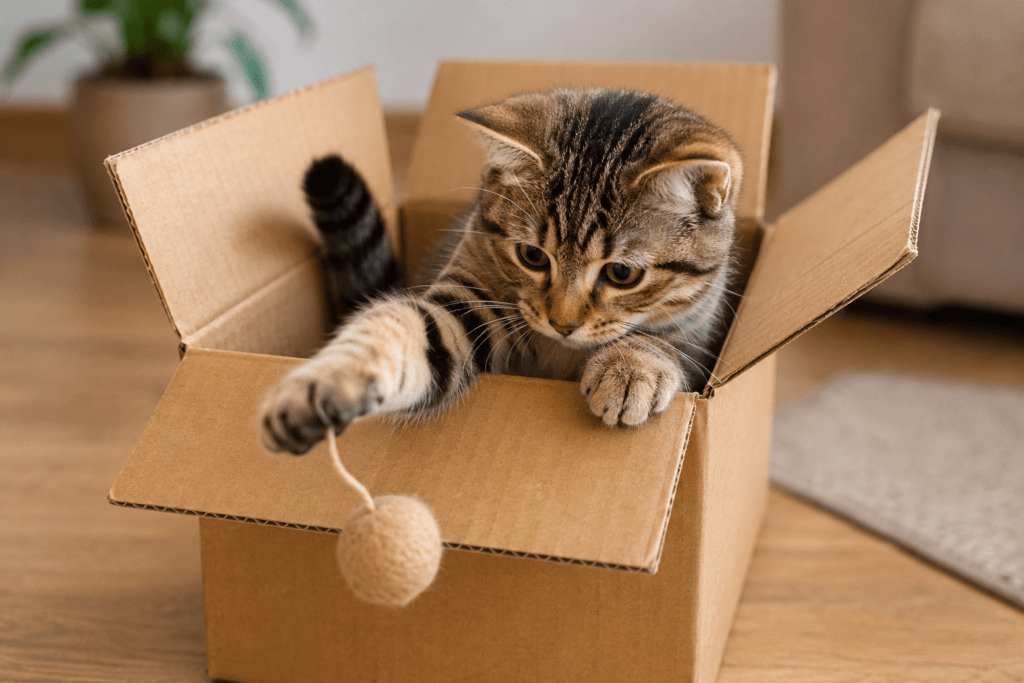
You can turn one into an exciting playground by:
- Cutting entrance holes
- Creating windows
- Joining several boxes together
- Hiding treats inside
- Adding crumpled paper
Your cat gets a place to hide, explore, climb and pounce—all in one inexpensive toy.
2. Toilet Roll Puzzle Toy
Don’t throw away empty toilet paper rolls.
Simply:
- Fold both ends closed
- Place a few treats inside
- Cut small holes
- Let your cat roll it around
This creates an easy food puzzle that stimulates both the brain and hunting instincts.
3. Crumpled Paper Ball
Sometimes the simplest toys are the most popular.
Take ordinary paper, crumple it into a loose ball and toss it across the floor.
The unpredictable movement often triggers a cat’s natural prey drive.
Avoid glossy paper or anything with staples attached.
4. Sock Catnip Toy
An old sock can become your cat’s new favourite toy.
Fill it with:
- Dried catnip
- Silvervine (for cats that don’t respond to catnip)
- Soft stuffing
Tie the end securely and let your cat wrestle, kick and cuddle it.
5. Feather Wand
Interactive toys strengthen the relationship between you and your cat.
Attach feathers or strips of fleece to a wooden dowel using strong cord.
Move it like prey:
- Hide behind furniture
- Dart across the floor
- Pause occasionally
- Let your cat “catch” it
Ending each play session with a successful catch helps satisfy your cat’s hunting instincts.
6. Muffin Tin Treasure Hunt
Place treats into several muffin tin cups.
Cover some cups with lightweight balls or crumpled paper.
Your cat must figure out how to uncover each hidden reward.
This is excellent mental enrichment for indoor cats.
7. DIY Cat Tunnel
Large paper bags or cardboard boxes joined together create an exciting tunnel.
Cats love:
- Running through tunnels
- Ambushing toys
- Hiding
- Exploring enclosed spaces
Adding a few side openings makes it even more entertaining.
8. Hanging Ribbon Toy
Tie soft fleece strips to a sturdy chair.
Allow them to hang just above the floor.
Many cats enjoy batting and pouncing on the moving strips.
Never leave ribbon toys out when you’re not supervising.
Rotate Toys for Maximum Interest
One mistake many owners make is leaving every toy available all the time.
Instead:
- Put some toys away.
- Rotate them every few days.
- Reintroduce older toys later.
To your cat, they suddenly become “new” again.
This simple trick keeps play exciting without spending extra money.
How Much Play Does a Cat Need?
Most adult cats benefit from:
- Two or three play sessions each day
- Around 10–15 minutes per session
Kittens usually enjoy much longer periods of active play.
Older cats still benefit from daily gentle exercise, although their sessions may be shorter.
Signs Your Cat Is Enjoying Play
Healthy play often includes:
- Wide curious eyes
- Crouching before pouncing
- Chasing
- Gentle kicking
- Carrying toys around
- Relaxed behaviour after play
If your cat becomes frustrated or overstimulated, simply slow the game down and allow them to “win.”
Frequently Asked Questions
Are homemade cat toys safe?
Yes, provided they are made from safe materials and regularly inspected for damage. Always supervise toys containing string, ribbon, or small parts.
Why does my cat ignore new toys?
Cats all have different personalities. Some enjoy chasing, while others prefer stalking, climbing, or puzzle toys. Try a variety to discover what your cat enjoys most.
Is catnip safe?
For most healthy adult cats, yes. Not every cat responds to catnip, and kittens under about six months often show little interest.
Can homemade toys replace store-bought toys?
Absolutely. Many homemade toys are just as engaging, especially when used during interactive play with you.
Final Thoughts
Some of the happiest cats I’ve known have spent hours playing with simple homemade toys rather than expensive gadgets. What matters most isn’t the price of the toy—it’s the opportunity to satisfy your cat’s natural instincts to hunt, explore, climb, and play.
By spending just a few minutes creating safe DIY toys, you can enrich your cat’s daily life, encourage healthy exercise, and enjoy more quality time together. Often, the greatest gift you can give your cat isn’t something you buy—it’s your time and attention.