
Most lists of the best enrichment toys for bored cats rank products by popularity. This guide works the other way around: it starts with what your cat is doing that you want to change, then matches a type of toy to that behavior. A puzzle feeder and a wand toy solve different problems, and buying the wrong one is how a toy ends up under the sofa.
A note on links: some product links on this site are affiliate links, which means a purchase may earn a commission at no extra cost to you. The full details are on the affiliate disclosure page.
Why a bored cat acts out, and what a toy can and can’t fix
Cats are predators with small home territories. In the wild, a cat’s day is built around a sequence: stalk, chase, pounce, catch, eat, groom, sleep. A house cat fed from a bowl skips most of that sequence, and the energy and instinct behind it still have to go somewhere. Night zoomies, ankle ambushes, shredded sofa corners and constant begging are often that energy finding an outlet you did not choose.
A toy can give those instincts a legal outlet. A puzzle feeder gives the hunting-and-eating part of the sequence something to do. A wand toy lets the stalk-and-pounce part play out. A scratcher gives claws a surface that is better than your armchair.
A toy cannot fix everything. Overgrooming, sudden changes in litter box habits, new aggression and hiding can have medical causes or come from stress, such as a move, a new pet, or a change in routine. If a behavior is new, intense, or involves bald patches or sore skin, talk to your vet before buying anything. Enrichment helps with boredom, and boredom is only one possible cause.
Match the toy to the behavior: a quick guide
Use this as a shortcut, then read the section for your cat’s problem.
What your cat is doing Toy type that helps Why it fits Begging, wolfing food, pestering you before meals Puzzle feeders, snuffle and foraging mats Makes meals take effort and time Ambushing ankles, biting hands in play Wand toys, small chase toys Redirects the hunting urge onto a target that is not you Night zoomies, 3 a.m. racing Evening wand sessions, then a food puzzle Burns energy and finishes with a meal, which mimics the natural sequence Scratching furniture Sturdy scratchers in the right spots Gives claws a better surface where the cat already scratches Staring out windows, chattering, restlessness Window perches, bird-watching spots Adds something to watch Climbing curtains, shelves, counters Cat trees, wall shelves, tall perches Provides height as a legitimate option
Many cats show more than one of these, so start with the one that bothers you most. Changing one thing at a time also tells you whether it worked.
Puzzle feeders and foraging toys for cats who beg, binge or hunt your ankles
Food puzzles turn a meal into a task. The cat has to paw, nudge or search to get the food out, which uses the same skills as hunting. They suit cats who eat too fast, cats who nag you for food, and indoor cats with plenty of energy and little to do.
There are a few common types:
- Treat balls and rolling dispensers: the cat bats the toy and kibble falls out. These are the easiest starting point.
- Puzzle boards and slider feeders: food sits in compartments covered by sliding pieces or cups. The cat works out how to open them.
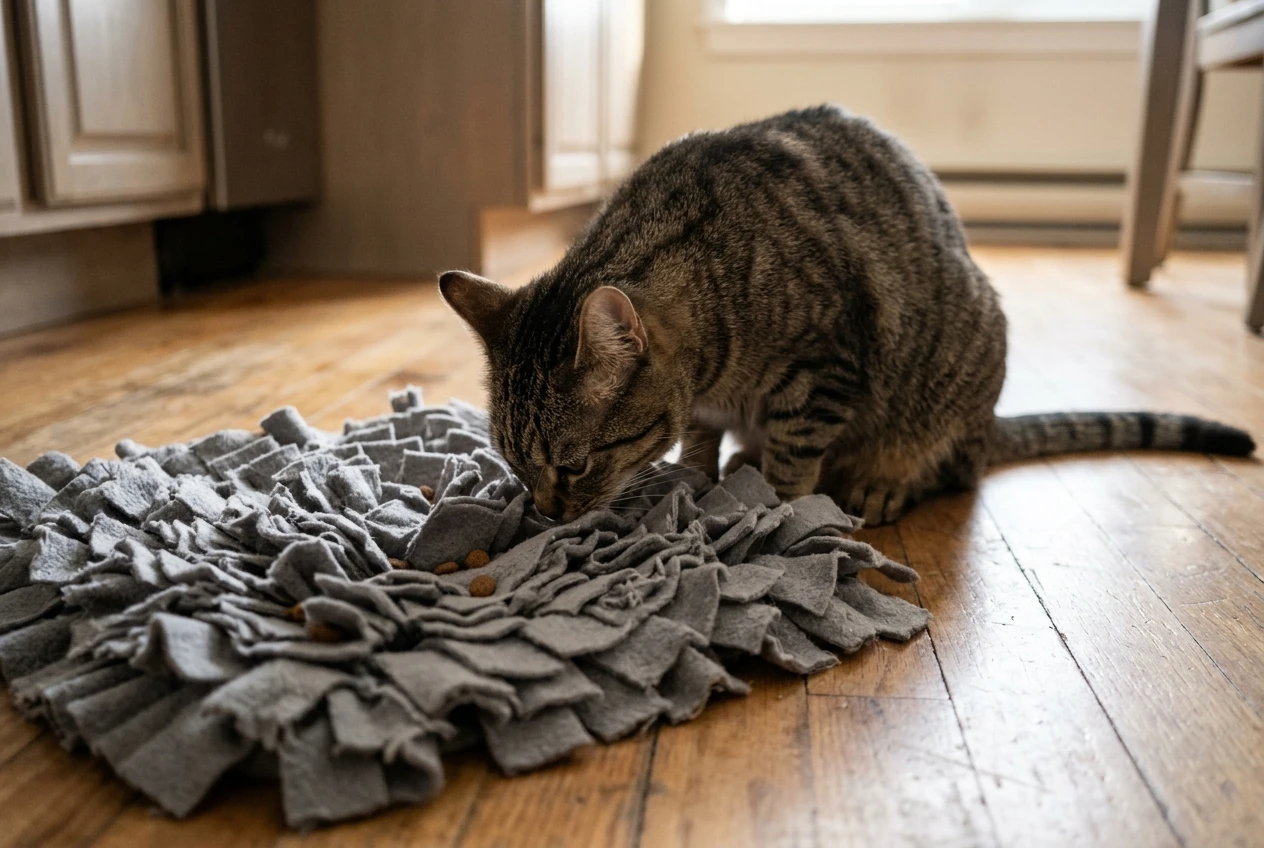
- Snuffle and foraging mats: food is tucked into fabric folds or channels, so the cat has to sniff and dig for it.
- DIY options: an egg carton or a cardboard box with holes cut in it works as a basic foraging toy, as long as the cat cannot swallow any of the pieces.
Start easy. If the first puzzle is too hard, a cat will give up and go back to the bowl. Fill it with food the cat already likes, leave some pieces visible or loose, and let the cat succeed within the first minute. Once the cat is confident, raise the difficulty a little at a time.
Use part of your cat’s regular daily food in the puzzle rather than adding extra, particularly if weight is a concern. Dry kibble works in most designs. If your cat eats wet food only, look for lick-style mats or feeders made for wet food.
Wand and interactive toys for night zoomies and pent-up energy
Wand toys are the best match for cats who ambush ankles, pounce on feet under blankets, or race around at night. They put a human in the game, which most cats prefer to solo toys, and they let you control the pace and the ending.
Move the toy like prey. Real prey does not run straight at a cat. It darts, stops, hides behind furniture and slows down when it tires. Drag the toy away from your cat, pause, twitch it, let it vanish behind a chair, and then let your cat catch it. Never end a session with the toy always just out of reach. Cats need to complete the sequence to feel satisfied.
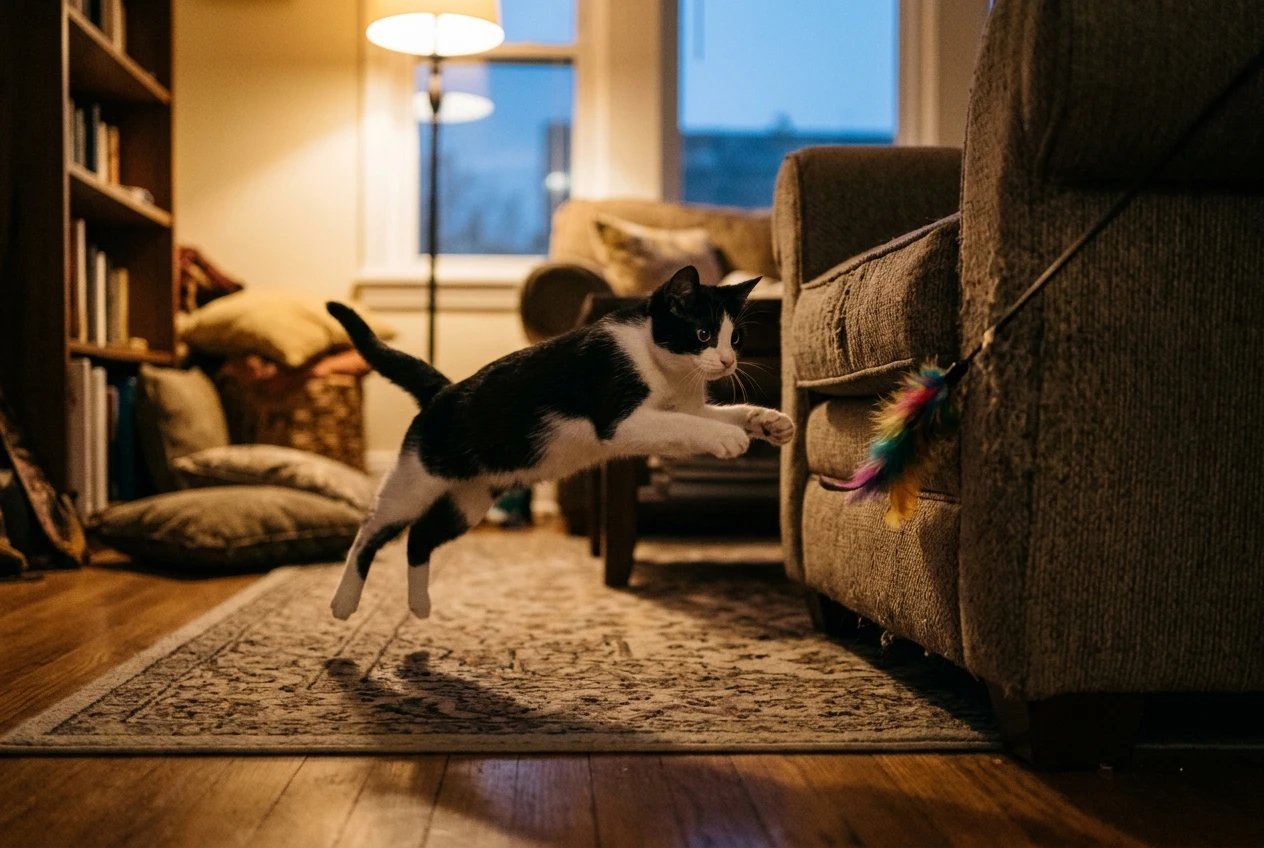
For night zoomies, timing matters. Cats tend to be most active around dawn and dusk, so a play session in the evening, followed by a meal or a food puzzle, can set up a calmer night. The play burns energy, the food completes the hunt, and grooming and sleep tend to follow.
Other interactive options worth considering:
- Small crinkle balls, fake mice or feather toys for solo chasing between sessions
- Tunnels and paper bags (handles removed) for hiding and ambushing
- Battery-powered toys that move on their own, which are good as a supplement but do not replace a person
Put wand toys away when the session is over. A wand left lying around becomes a chewing and tangling hazard, and it also stops feeling special.
Scratchers, climbing spots and window perches for cats who redecorate your furniture
Scratching is a normal behavior. Cats scratch to stretch, to maintain their claws, and to leave scent and visual marks. A cat scratching the sofa is not misbehaving; the sofa just happens to be the best surface in the room. The goal is a better option in the right place.
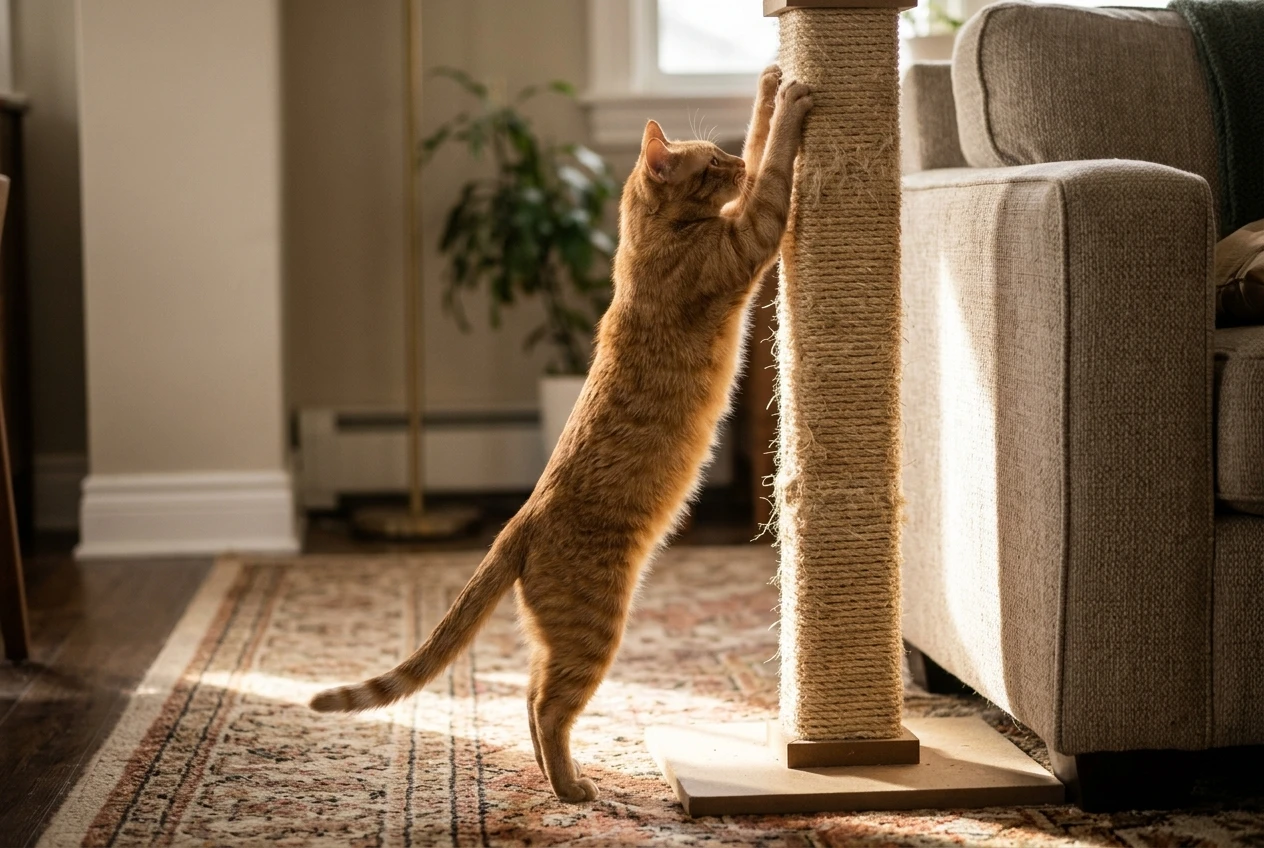
Scratchers: Put them where your cat already scratches. If the target is the corner of the sofa, place a scratcher right beside it. Cats often scratch after waking up and near entrances to rooms, so those spots are good candidates as well. The scratcher should be stable and tall or long enough for a full stretch. A scratcher that wobbles will be abandoned quickly. Try different materials, such as sisal rope, cardboard and carpet, and also different angles, since some cats prefer vertical and others horizontal.
Climbing spots: Cats that jump onto shelves, counters and curtains often want height. A cat tree, wall-mounted shelves or even a sturdy bookcase top with a bed on it gives that instinct somewhere approved to go. Choose something heavy or anchored so it cannot tip.
Window perches: For a cat that chatters at birds or stares outside for hours, a perch at a window adds hours of watching. Place it where there is a view of trees, a feeder or a street. Make sure the perch is firmly attached or supported, and that the window or screen is secure.
If you want help reading what your cat’s posture and tail are saying while they use these spaces, the guide to cat body language covers it.
How to introduce a new toy so your cat actually plays with it
Many cats ignore a new toy dropped on the floor. A few habits improve the odds.
- Introduce one item at a time. Several new things at once can overwhelm a cat, and you will not know which one worked.
- Make it smell familiar. Rub the toy with a towel your cat has slept on, or leave it near the cat’s favorite resting spot for a day before using it.
- Add movement or food. For a scratcher, rub a little catnip on it if your cat responds to catnip, or drag a wand toy across its surface. For a puzzle feeder, start with the food visible and easy to reach.
- Play with the cat the first few times. Show how the toy works. Many cats need a person to start the game.
- Pick the right moment. Cats are generally more receptive before meals, when they are alert and a little hungry, than right after eating.
- Do not force it. If your cat walks away, put the toy down and try again later, or in another room. Pushing a cat toward an object can make it avoid that object.
Be patient with scratchers in particular. A cat may need a few days of sniffing before it commits. Praise or a small treat when it uses the scratcher helps, and so does leaving the old scratching spot protected with a cover or double-sided tape designed for furniture while the new habit forms.
Rotating toys and building a daily play routine that keeps your cat curious
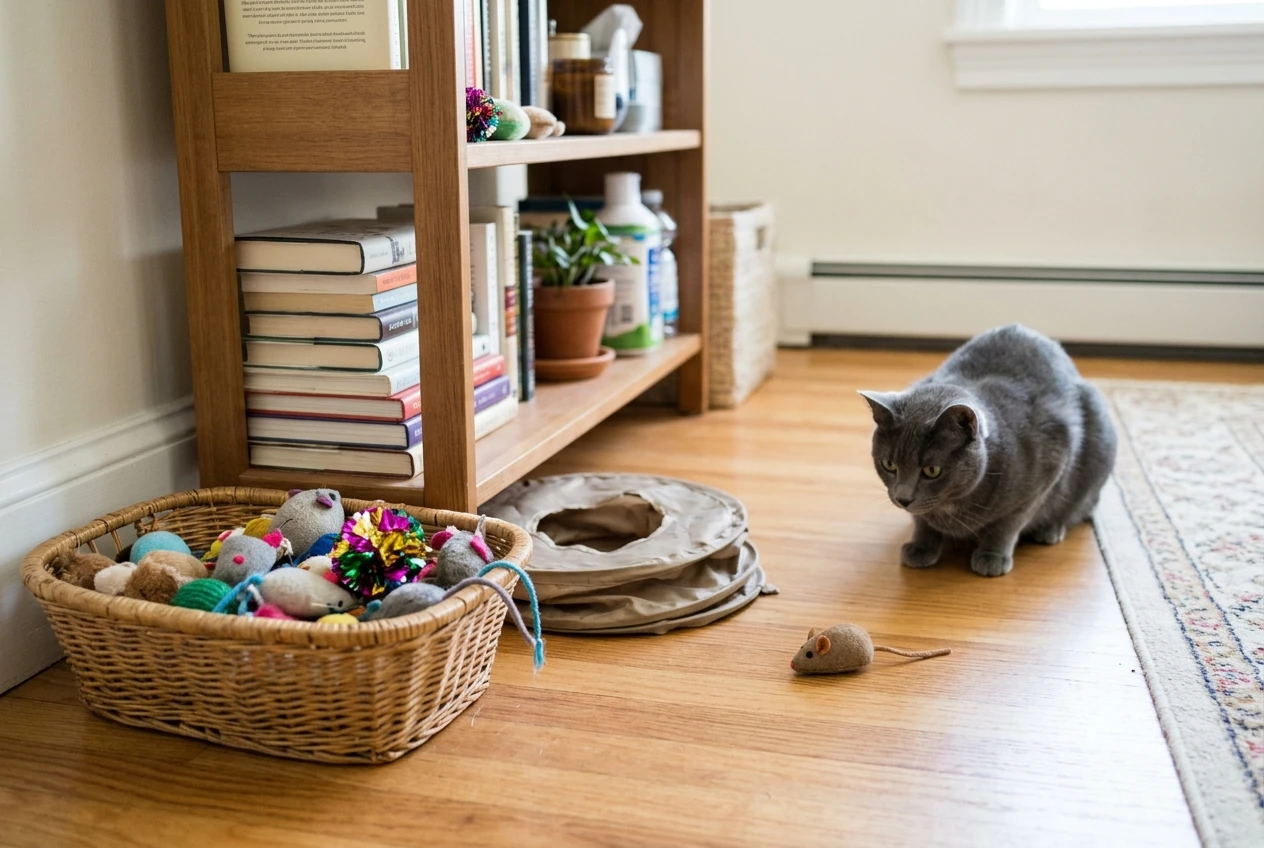
Cats lose interest in objects they see every day. A simple fix is rotation: keep a few toys out, store the rest, and swap them every week or so. A toy that comes back after a few days away often gets a fresh reaction.
A routine is just as important as the toys. Aim for short, regular play sessions rather than an occasional long one. Many owners fit in two sessions a day of around ten to fifteen minutes each, adjusted to the cat’s age and energy. Younger cats usually want more, and older cats may prefer slower play with frequent rests.
A workable daily pattern looks like this:
- Morning: a short wand session, then breakfast in a puzzle feeder or on a foraging mat
- During the day: a window perch, a rotated solo toy or two, and a scratcher in the main living area
- Evening: the longest wand session of the day, ending with the cat catching the toy, followed by dinner
Watch for signs that the routine is working. Calmer evenings, fewer ankle attacks, and scratching that moves to the scratcher all suggest the toys are doing their job. If nothing changes after a few weeks, review the setup: is the toy in the right place, is it the right type for the behavior, and has a medical or stress cause been ruled out?
Safety checks before you buy: what to avoid for your cat’s age and chewing habits
Before adding any toy to your cart, check these points.
- Strings, ribbons, yarn and elastic: swallowed string can cause serious intestinal damage and needs urgent veterinary care. Use string-based wand toys only under supervision and store them out of reach.
- Small parts: eyes, bells, feathers and beads that can be chewed off are a choking and swallowing risk, especially for kittens and cats that chew.
- Chewers: if your cat chews or shreds soft toys, avoid cheap fabric items and anything that falls apart into pieces. Choose sturdier materials and inspect toys regularly.
- Kittens: they explore with their mouths and are more likely to swallow things. Pick larger, simple toys and supervise play.
- Seniors and cats with arthritis: a tall cat tree may be a poor fit. Look for low-entry perches, ramps and soft beds, and use gentle toys that do not require jumping.
- Puzzle feeder design: check that your cat’s head or paws cannot become stuck in openings, and that the toy is easy to clean. Wash food puzzles often, as old food residue goes bad.
- Stability: cat trees, shelves and perches should be anchored or weighted so they cannot tip with a heavy cat landing on them.
Throw away any toy that is broken, frayed or missing pieces. Replacing it costs less than a vet visit.
Pick one toy and try it this week
Choose the single behavior that bothers you most, find its row in the guide above, and pick one toy type to try. Set it up following the introduction steps, and give it a week or two before judging it. If you buy through a product link on this site, the commission details are covered in the affiliate disclosure mentioned at the top of this article.
If you are not sure whether your cat is bored, stressed or something else, read Signs Your Pet Is Bored and What To Do About It first. It will help you decide which behavior to tackle, and then this guide will help you choose the toy.