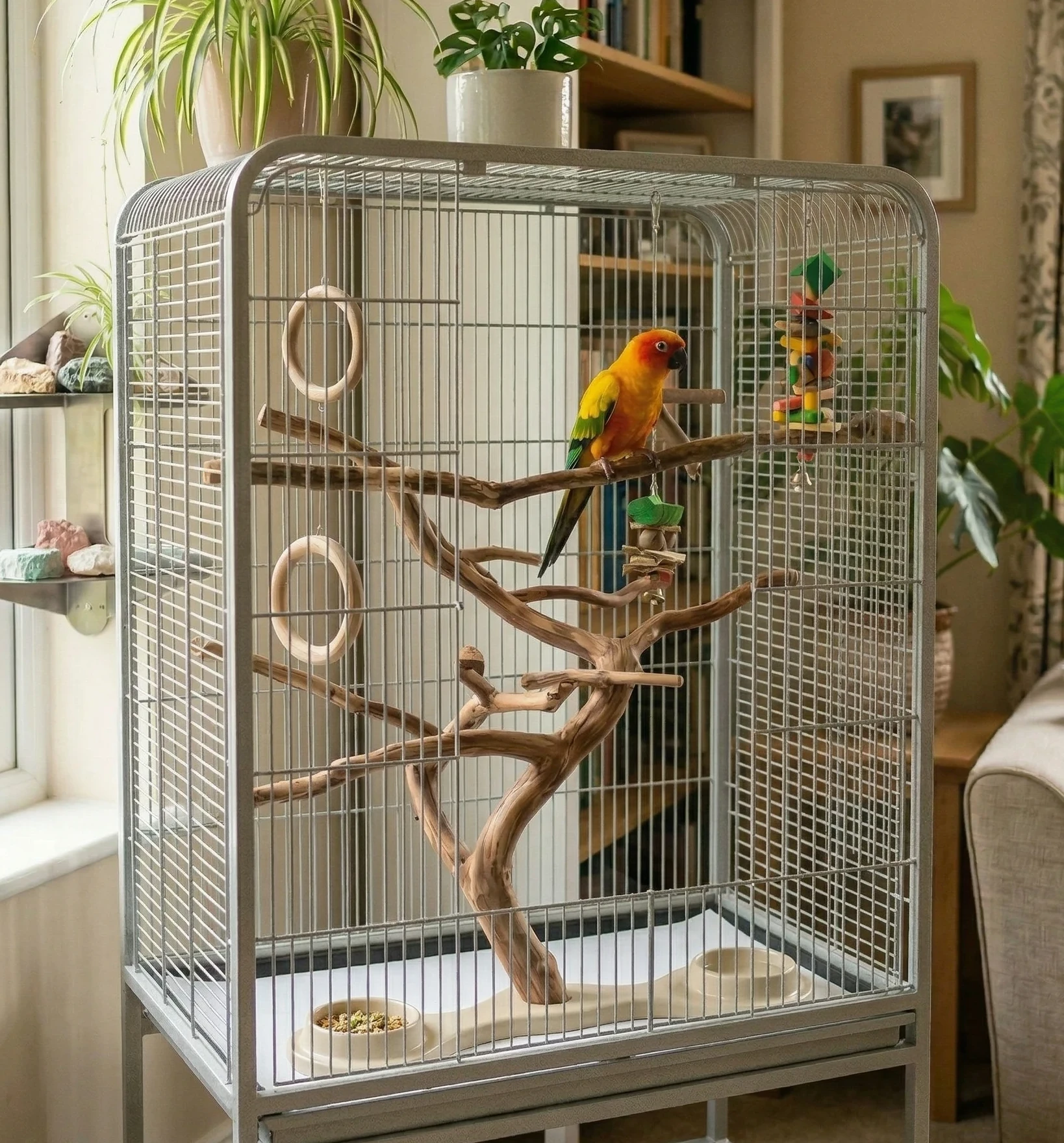
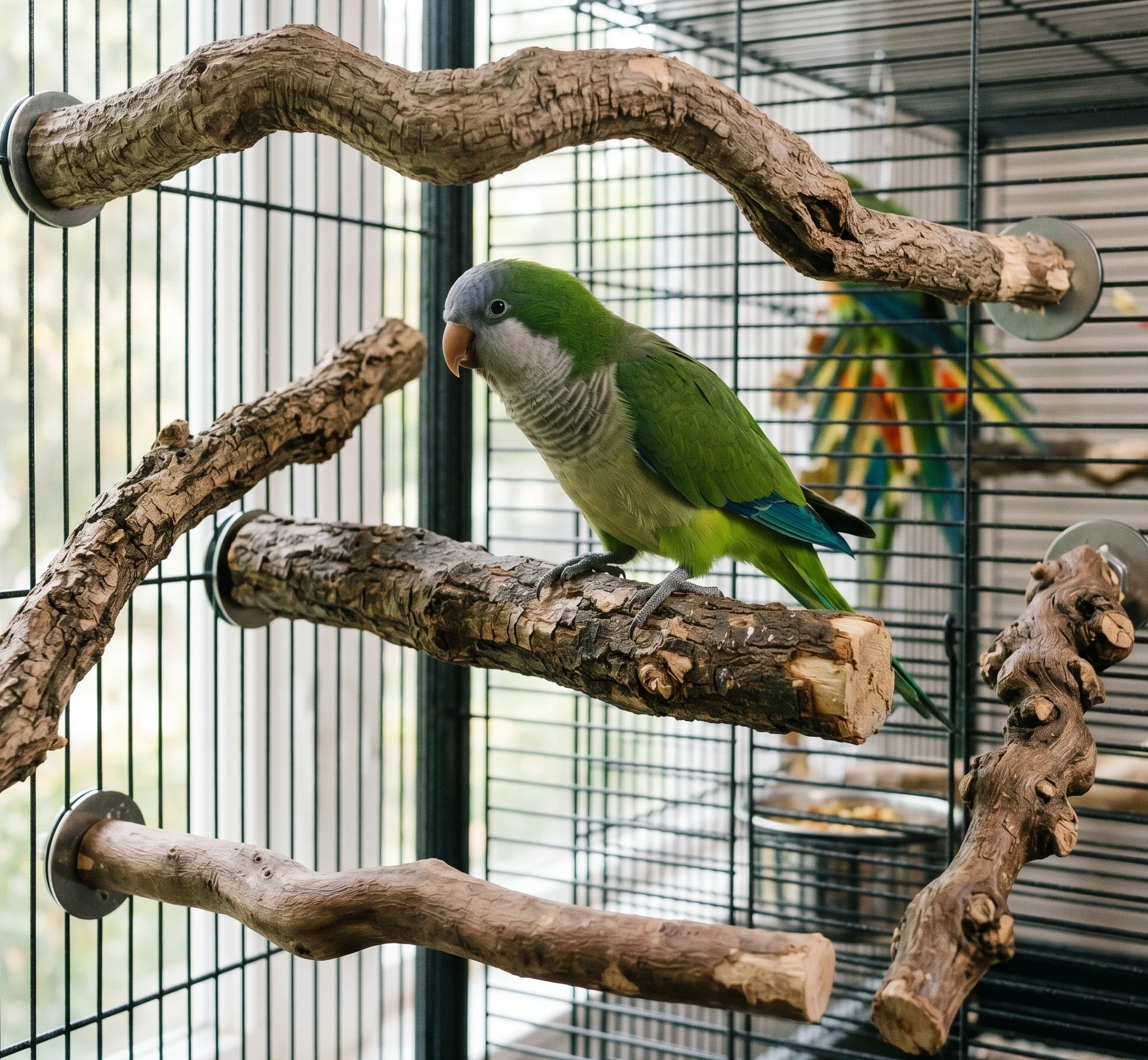
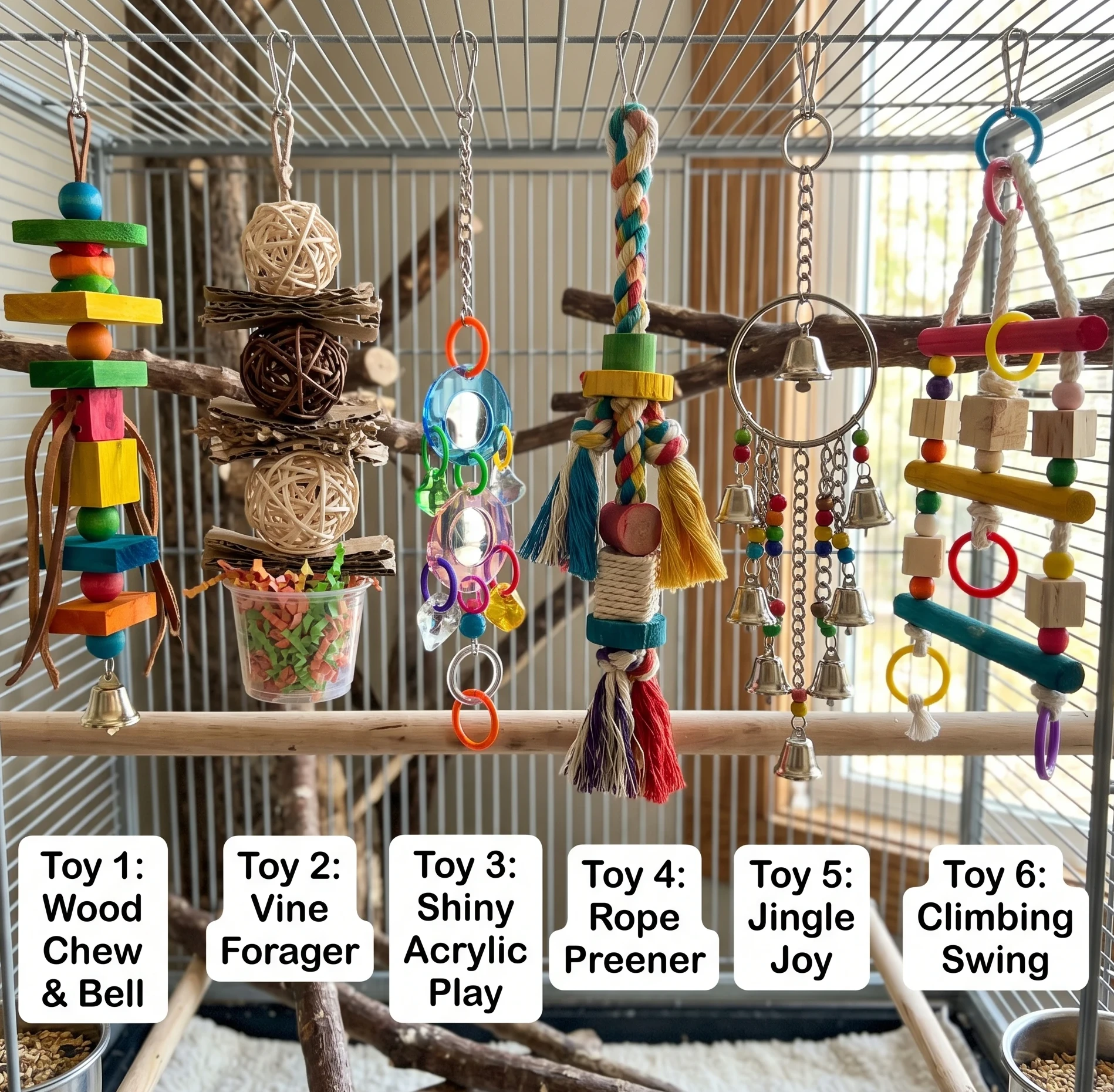
Setting up your bird’s cage properly is one of the most important things you can do as a bird owner. A well-designed cage doesn’t just keep your bird safe—it creates an environment where they can feel secure, stimulated, and truly at home, more than just a place to sleep. It’s their living space, their comfort zone, and in many ways, their world. Getting this right makes a huge difference in your bird’s health, behavior, and overall happiness.
In this guide, I’ll walk you through exactly how to set up a bird cage the right way, step by step.
🏡 Choosing the Right Cage Size and Type
The first step is choosing the right cage—and bigger is almost always better.
Your bird should be able to:
Fully stretch their wings
Move freely between perches
Climb and explore comfortably
Bar spacing is just as important:
Too wide → risk of escape or injury
Too narrow → restricted movement
As a general rule:
Always choose the largest cage your space and budget allow.
Consistency in feeding location also helps your bird feel secure.
🧼 Keeping the Cage Clean
Cleanliness is essential for your bird’s health.
Daily tasks:
Change water
Remove leftover food
Spot-clean droppings
Weekly tasks:
Clean perches and toys
Replace cage lining
Wipe down bars
A clean cage reduces the risk of illness and keeps your bird comfortable.
🛑 Bird Cage Safety Tips
Safety should always be a top priority.
Make sure:
All materials are bird-safe (non-toxic)
There are no sharp edges
Doors and locks are secure
Avoid:
Rusty cages
Unsafe paints or coatings
Small detachable parts your bird could swallow
Your bird’s environment should always be as safe as possible.
🧠 Creating a Balanced Environment
A great cage setup isn’t just about equipment—it’s about balance.
Your bird needs:
Space to move
Areas to rest
Opportunities to play and explore
Avoid overcrowding the cage with too many items. Give your bird room to breathe and move naturally.
🔗 How Cage Setup Fits Into Overall Bird Care
A proper cage setup is the foundation of your bird’s wellbeing.
When combined with:
Good nutrition
Regular interaction
Training
…it creates a complete, healthy lifestyle.
👉 For a full overview of everything your bird needs, read my complete guide to pet bird care.
❤️ Final Thoughts: Creating a Home, Not Just a Cage
At the end of the day, your bird’s cage should feel like a safe, comfortable home—not a confined space.
When you take the time to set it up properly, you’ll notice the difference almost immediately. Your bird will be more relaxed, more active, and far more content.
It’s a small effort that leads to a big improvement in your bird’s quality of life.