

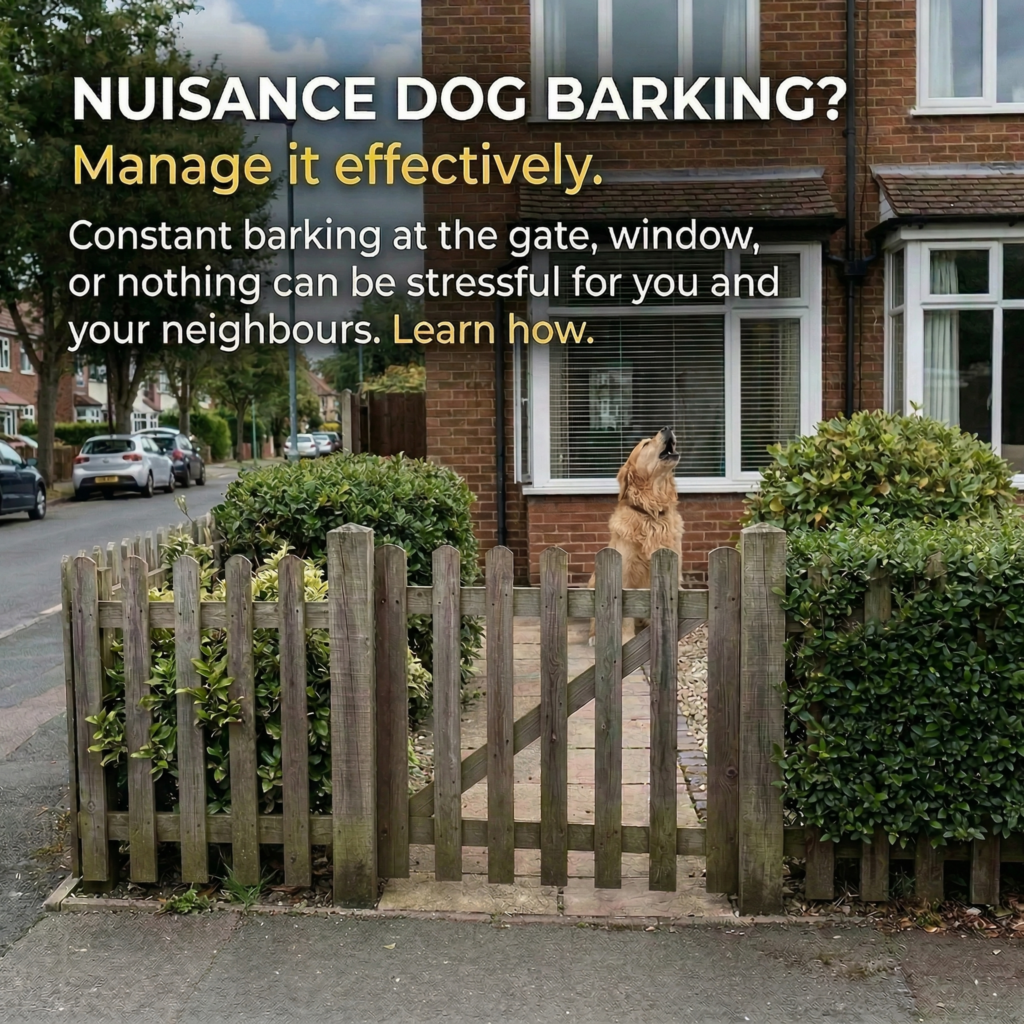
Stop Nuisance Dog Barking: Effective, Kind Solutions for a Quieter, Happier Home
There are few things more frustrating than a dog that seems to bark at everything. Whether it’s passing cars, the mail carrier, squirrels, neighbours, or noises you can’t even hear, constant barking can quickly become stressful for everyone involved.
The good news is that barking itself isn’t the problem. In fact, barking is one of the most natural ways dogs communicate. The real challenge is understanding why your dog is barking and teaching them more appropriate ways to respond.
Most nuisance barking can be greatly reduced through patience, consistency, and positive reinforcement. Punishment may stop barking for a moment, but it rarely addresses the real cause and can even make the behaviour worse.
In this guide, we’ll explore the different reasons dogs bark, how to identify your dog’s triggers, and practical training methods that can help create a calmer, quieter home.
Why Do Dogs Bark?
Dogs bark for many reasons, and each bark serves a purpose. Before trying to stop excessive barking, it’s important to understand what your dog is trying to communicate.
Some dogs bark because they’re excited, while others bark out of fear, frustration, loneliness, or boredom. Many dogs also bark simply because they have learned that barking gets them what they want.
Think of barking as your dog’s language. Once you understand what they’re “saying,” finding the right solution becomes much easier.
Normal Barking vs. Excessive Barking
A certain amount of barking is perfectly healthy.
Normal barking may occur when your dog:
Greets family members.
Alerts you to visitors.
Wants to play.
Becomes excited during walks.
Responds briefly to unfamiliar sounds.
Excessive barking is different.
It often continues long after the trigger has disappeared, happens repeatedly throughout the day, interrupts daily life, or causes tension with neighbours.
When barking becomes constant, it’s time to investigate the underlying cause.
The Most Common Reasons Dogs Bark Excessively
1. Attention Barking
Some dogs quickly discover that barking brings results.
Perhaps someone talks to them, throws a toy, gives them food, or simply looks at them. Even negative attention can accidentally reward barking.
Signs include:
Barking directly at family members.
Barking while you’re eating.
Barking for treats.
Barking whenever you stop playing.
What helps?
Avoid rewarding barking. Instead, wait for a few moments of quiet before giving attention. Reward calm behaviour consistently so your dog learns that silence—not barking—gets the reward.
2. Territorial Barking
Many dogs naturally protect what they consider their home.
Common triggers include:
Delivery drivers.
Visitors.
Passing dogs.
People walking past windows.
Cars entering the driveway.
Some territorial barking is normal, but it can become excessive if your dog feels responsible for guarding the entire property.
Reduce visual triggers by closing curtains or using window film, and teach a reliable “Quiet” cue while rewarding calm behaviour.
3. Boredom Barking
Dogs were bred to work alongside humans. Without enough physical exercise or mental stimulation, many create their own entertainment—and barking often becomes that activity.
Signs include:
Barking when left alone.
Barking at random sounds.
Digging.
Chewing furniture.
Restlessness.
A tired dog is generally a quieter dog.
Daily walks, puzzle toys, scent games, training sessions, and interactive play can dramatically reduce boredom barking.
4. Separation Barking
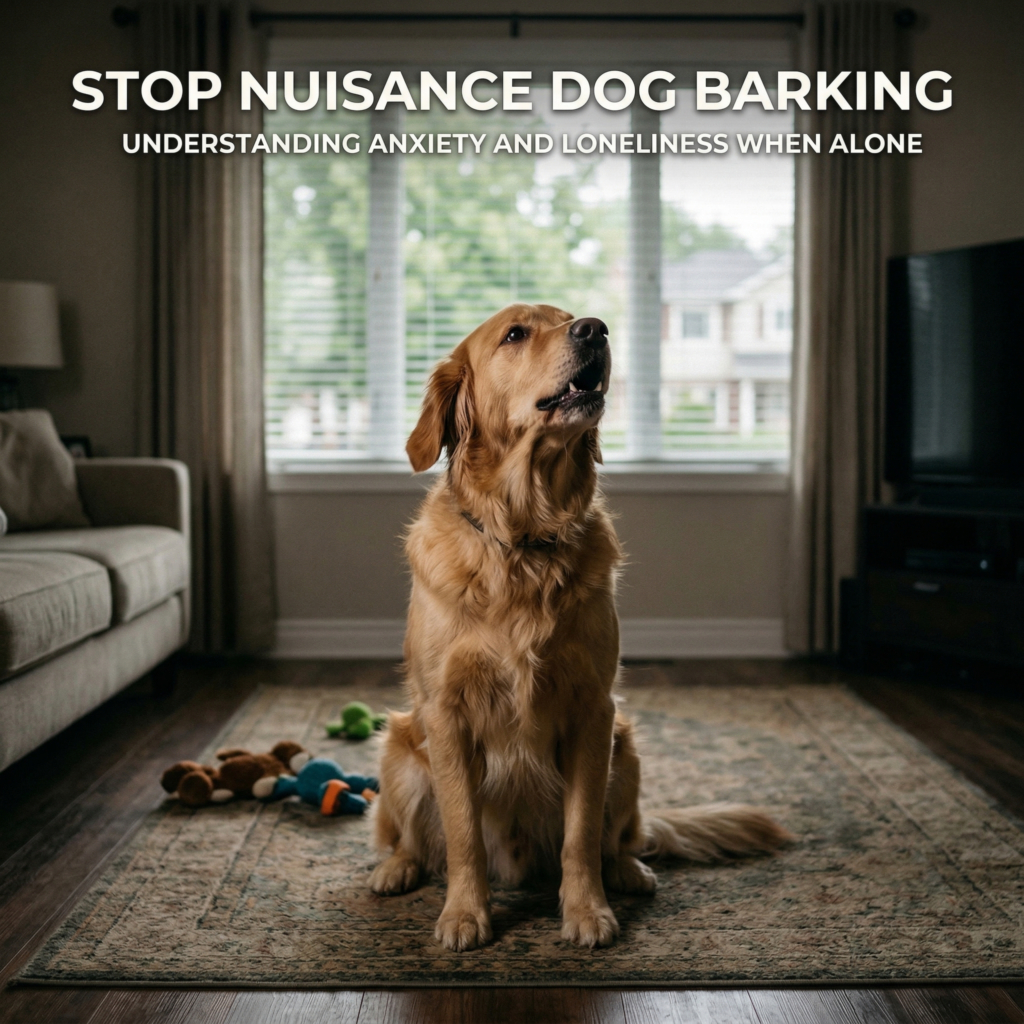
Dogs are social animals, and some become anxious when left alone.
Separation-related barking often starts shortly after the owner leaves and may continue for long periods.
Other signs include:
Destructive behaviour.
Pacing.
Drooling.
Attempts to escape.
House-soiling.
If your dog only barks when left alone, separation anxiety—not disobedience—may be the real problem.
Gradual desensitisation and confidence-building exercises are usually far more effective than punishment.
“How to Calm an Anxious Dog: Tips That Actually Work”)
5. Fear Barking
A frightened dog often uses barking to increase distance from something that worries them.
Common triggers include:
Thunderstorms.
Fireworks.
Loud vehicles.
Strangers.
Other dogs.
Rather than forcing your dog to face their fears, slowly build positive experiences while allowing them to feel safe.
6. Excitement Barking
Some dogs simply struggle to contain their enthusiasm.
They bark when:
You come home.
Visitors arrive.
It’s time for a walk.
Dinner is being prepared.
Teaching calm greetings and rewarding relaxed behaviour can greatly reduce excitement barking.
7. Frustration Barking
Frustration occurs when your dog wants something but cannot reach it.
Examples include:
Another dog behind a fence.
A squirrel in a tree.
A favourite toy.
A person they want to greet.
Teaching impulse control exercises and redirecting your dog’s attention can make a big difference.
Identifying Your Dog’s Barking Triggers
Before starting any training, spend several days observing exactly when your dog barks.
Ask yourself:
What happened immediately before the barking?
Who or what was nearby?
How long did the barking continue?
What made it stop?
Did anyone accidentally reward the barking?
Keeping a simple journal often reveals patterns that weren’t obvious before.
Once you identify the triggers, your training becomes far more focused and effective.
Your First Steps Toward a Quieter Dog
Many owners expect barking to disappear overnight, but lasting behaviour change takes consistency.
Start with these simple steps:
Increase Daily Exercise
A physically tired dog is far less likely to bark excessively.
Provide Mental Enrichment
Food puzzles, sniffing games, training sessions, and chew toys keep your dog’s mind busy.
Remove Obvious Triggers
Block window views, reduce outside noise where possible, and manage situations that trigger barking while training is underway.
Reward Calm Behaviour
One of the biggest mistakes owners make is only noticing the barking.
Instead, actively reward moments when your dog is lying quietly, relaxing, or calmly watching the world go by.
Dogs repeat behaviours that earn rewards.

Part 2 – Training Techniques, FAQs, and Final Tips
Positive Training Techniques That Really Work
Once you’ve identified why your dog is barking, you can begin teaching them a more appropriate response. Remember, the goal isn’t to stop barking altogether—it’s to help your dog understand when barking is unnecessary.
Patience and consistency are your greatest tools. Dogs learn through repetition, and rewarding the behaviour you want to see is far more effective than punishing the behaviour you don’t.
Teach the “Quiet” Command
The “Quiet” command can be very effective when taught calmly and consistently.
Try these steps:
- Allow your dog to bark once or twice at a trigger.
- Calmly say “Quiet” in a clear, gentle voice.
- The moment your dog stops barking—even for just a second—immediately praise them and offer a small treat.
- Repeat this exercise regularly using different everyday situations.
- Gradually increase the amount of quiet time before giving the reward.
With practice, your dog will begin to associate the word “Quiet” with staying calm rather than continuing to bark.
Reward Calm Behaviour
One of the easiest training opportunities is when your dog is already behaving well.
If you notice your dog relaxing on their bed, quietly watching the world go by, or ignoring a distraction that would previously have triggered barking, quietly reward them with praise, affection, or a treat.
Many owners only notice their dogs when they are making noise. By rewarding calm moments, you encourage your dog to repeat them.
Redirect Their Attention
When you know a barking trigger is approaching, redirect your dog’s attention before the barking starts.
For example:
- Ask for a “Sit.”
- Practice a “Watch Me” cue.
- Offer a favourite toy.
- Scatter a few treats on the ground for your dog to sniff out.
This helps your dog learn that looking to you is more rewarding than reacting to the trigger.
Teach Alternative Behaviours
Dogs can’t bark continuously while performing another behaviour.
Teach your dog to:
- Go to a designated mat.
- Lie down quietly.
- Bring you a toy.
- Make eye contact with you.
- Sit and wait calmly.
Replacing barking with another behaviour often produces faster and longer-lasting results.
Common Mistakes That Can Make Barking Worse
Even well-meaning owners sometimes reinforce nuisance barking without realizing it.
Avoid these common mistakes:
Shouting at Your Dog
To your dog, shouting often sounds as though you’re joining in the barking. Instead of helping, it can increase your dog’s excitement.
Inconsistent Rules
If barking is ignored one day but rewarded the next, your dog receives mixed messages. Everyone in the household should respond consistently.
Lack of Exercise
Many behavioural problems—including barking—improve dramatically when dogs receive enough daily physical activity and mental stimulation.
Expecting Instant Results
Changing behaviour takes time. Some dogs improve within days, while others require several weeks of consistent training.
Using Punishment
Shock collars and harsh punishment may stop barking temporarily, but they often increase fear and anxiety. This can create new behavioural problems and damage the trust between you and your dog.
Positive reinforcement builds confidence and creates lasting behavioural change.
When Barking Could Be a Medical Problem
Although barking is usually behavioural, sudden or unusual barking can sometimes indicate an underlying health issue.
Speak with your veterinarian if your dog:
- Suddenly begins barking excessively.
- Appears confused or disoriented.
- Shows signs of pain.
- Is pacing continuously.
- Has changes in appetite or energy.
- Is an older dog showing signs of cognitive decline.
A veterinary examination can rule out medical conditions before beginning a behaviour modification plan.
Preventing Future Barking Problems
Prevention is always easier than correction.
Here are some habits that help keep barking under control:
- Provide daily exercise suited to your dog’s breed and age.
- Include short training sessions throughout the week.
- Rotate toys to prevent boredom.
- Offer puzzle feeders and scent games.
- Socialize puppies with a variety of people, places, and experiences.
- Reward calm behaviour every day.
- Avoid accidentally rewarding attention-seeking barking.
A mentally and physically fulfilled dog is generally calmer, happier, and less likely to bark excessively.
Quick Troubleshooting Guide
| If your dog barks because… | Try this… |
|---|---|
| They’re bored | Increase walks, playtime, and puzzle toys. |
| They want attention | Wait for quiet before giving attention. |
| They’re protecting the house | Reduce visual triggers and teach “Quiet.” |
| They’re frightened | Build confidence gradually and avoid forcing scary situations. |
| They’re excited | Practice calm greetings and reward self-control. |
| They’re lonely | Increase companionship, enrichment, and gradual alone-time training. |
| They’re frustrated | Redirect attention and teach alternative behaviours. |
Frequently Asked Questions
Should I ignore my dog’s barking?
It depends on the cause.
Ignoring attention-seeking barking can be effective, but fear, anxiety, or medical-related barking should never be ignored. Always identify the reason before deciding on a training approach.
Do anti-bark collars work?
Some collars reduce barking temporarily, but they do not teach your dog why barking is unnecessary. Positive, reward-based training is generally a more humane and effective long-term solution.
How long does it take to stop nuisance barking?
Every dog is different.
Many owners notice improvement within a few weeks, but lasting behavioural change usually depends on consistent daily practice and addressing the underlying cause.
Is barking ever a good thing?
Absolutely.
Dogs bark to communicate, alert us to unusual situations, and express excitement or concern. The goal isn’t to eliminate barking but to prevent excessive or unnecessary barking.
Can older dogs learn to bark less?
Yes.
Dogs of all ages are capable of learning. Older dogs may require more patience, but positive reinforcement remains highly effective.
Final Thoughts
Living with a dog that barks excessively can be frustrating, but it’s important to remember that your dog isn’t trying to be difficult. They’re simply communicating in the only way they know how.
Once you understand the reason behind the barking, you can begin addressing the root cause rather than simply reacting to the noise.
By combining patience, consistent training, regular exercise, mental enrichment, and positive reinforcement, you’ll help your dog become more confident and relaxed. Over time, those calmer behaviours become habits, creating a happier home for both you and your four-legged companion.
Remember, progress may come in small steps, but every quiet moment is a success worth celebrating.