
Dogs greet the people they love with enthusiasm. A wagging tail, bright eyes, and an eager leap can seem adorable when they’re puppies. But as they grow, jumping on people can become frustrating, embarrassing, and even dangerous for children, elderly visitors, or anyone unsteady on their feet.
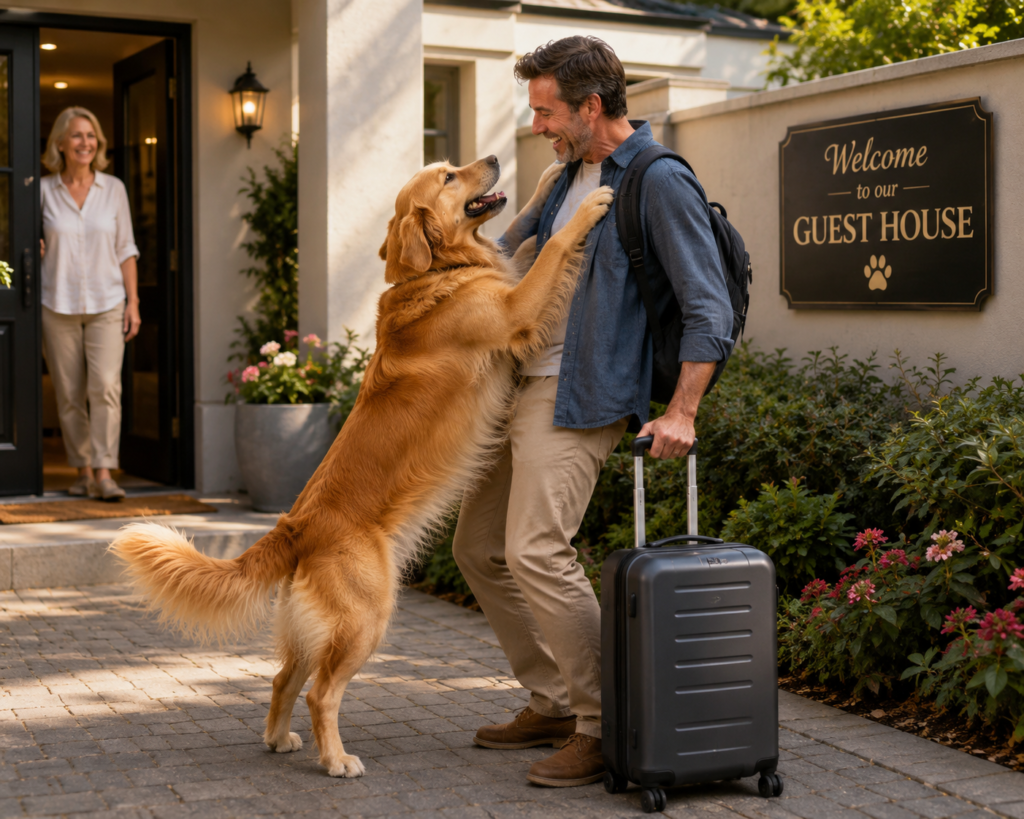
The good news is that jumping isn’t a sign of a “bad dog.” In most cases, it’s simply learned behavior that can be changed with patience, consistency, and positive reinforcement.
In this guide, I’ll show you why dogs jump, what mistakes to avoid, and the kind training methods that really work.
(Should you prefer, please click here for a short video.)
Why Do Dogs Jump on People?
Dogs naturally greet each other face-to-face. When your dog jumps up at you, they’re usually trying to get closer to your face because that’s how they communicate excitement and affection.
Other common reasons include:
- They’re excited to see you.
- They want your attention.
- They’ve accidentally been rewarded for jumping in the past.
- They have excess energy.
- They haven’t yet learned a better way to greet people.
Understanding the reason behind the behavior helps you choose the right training approach.
Why Punishment Usually Doesn’t Work
Many owners instinctively push their dog away, shout “No!”, or even knee the dog in the chest. While these methods may stop the behavior for a moment, they rarely teach the dog what you actually want instead.
Some dogs even see shouting or pushing as extra attention, making the jumping more rewarding.
Positive reinforcement focuses on rewarding the behavior you want rather than punishing the behavior you don’t.
Teach an Alternative Greeting
Instead of trying to stop your dog from doing something, teach them what to do instead.
A simple sit is one of the best replacement behaviors.
When your dog approaches:
- Ask for a sit before they reach you.
- The moment all four paws stay on the ground, praise warmly.
- Reward with a treat.
- Offer attention only while they remain sitting or standing calmly.
Before long, your dog begins to understand that calm greetings earn rewards, while jumping earns nothing.
Ignore the Jumping
Dogs repeat behaviors that get attention.
If your dog jumps:
- Turn your body away.
- Fold your arms.
- Avoid eye contact.
- Don’t speak to them.
- Wait until all four paws are back on the floor.
The instant your dog settles, reward them with praise, affection, or a small treat.
Timing is important. Reward calm behavior immediately so your dog clearly understands what earned the reward.
Ask Visitors to Help
One of the biggest reasons training fails is inconsistency.
If you ignore jumping but visitors immediately pet your dog, the behavior is reinforced.
Explain the plan to family members and guests:
- Wait for four paws on the floor.
- Reward calm greetings.
- Ignore jumping completely.
When everyone responds the same way, dogs usually learn much faster.
Practice Before Guests Arrive
Real-life situations can be overwhelming at first.
Practice greeting exercises with family members before introducing visitors.
You can:
- Ring the doorbell yourself.
- Walk out and back into the house.
- Reward calm behavior every time.
These short sessions build confidence without overwhelming your dog.
Burn Off Extra Energy
A dog bursting with energy often struggles to stay calm.
Before expecting polite greetings, allow your dog to release some energy through:
- A brisk walk
- A game of fetch
- Puzzle toys
- Scent games
- Short training sessions
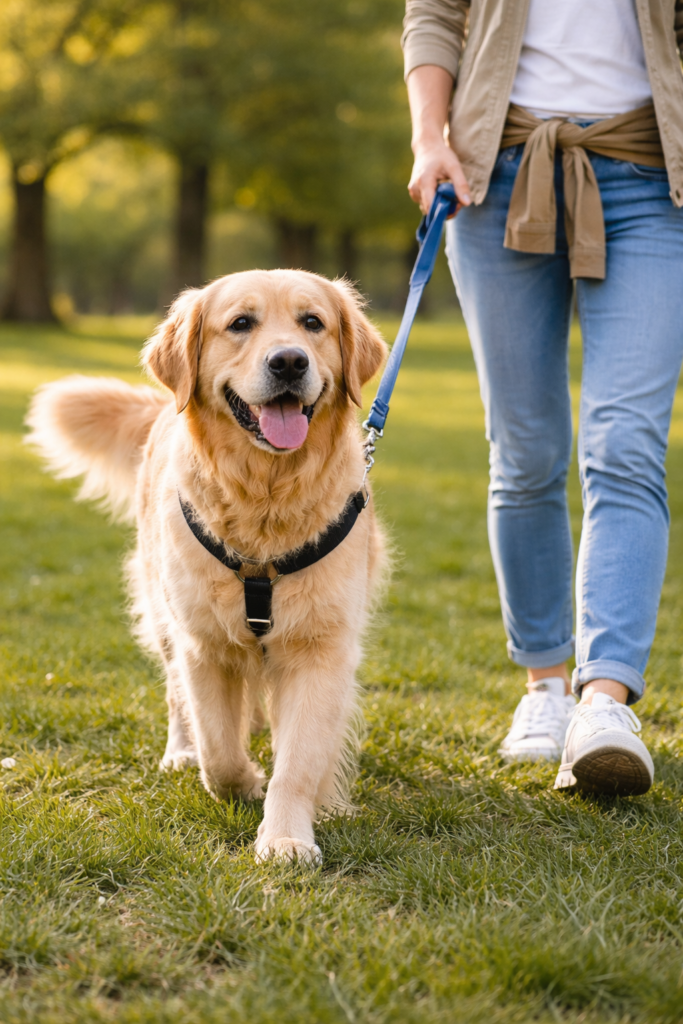
A mentally and physically satisfied dog is far more likely to greet people politely.
Keep Greetings Calm
Owners often unintentionally encourage excitement by using a high-pitched voice or making a big fuss when arriving home.
Instead:
- Enter quietly.
- Wait until your dog settles.
- Reward calm behavior.
- Keep greetings relaxed for the first minute or two.
Your calm attitude helps your dog remain calm as well.
Be Patient and Consistent
Training doesn’t happen overnight.
Every successful greeting strengthens the habit you’re trying to build.
If your dog occasionally jumps, don’t become discouraged. Simply return to the training plan and reward the behavior you want.
Dogs learn through repetition, and every calm greeting is another step toward lasting success.
Common Mistakes to Avoid
Many owners accidentally make training harder.
Avoid these common mistakes:
- Rewarding jumping with attention.
- Allowing some people to encourage jumping.
- Expecting instant results.
- Using punishment instead of teaching.
- Practising only when visitors arrive.
- Forgetting to reward calm greetings.
Small changes in consistency often produce big improvements.
Frequently Asked Questions
Should I push my dog off when they jump?
It’s better to avoid pushing your dog away. Many dogs see physical contact as attention. Instead, calmly turn away and reward your dog once all four paws are back on the ground.
How long does it take to stop jumping?
Every dog is different. Some learn within a few weeks, while others may take longer depending on age, excitement levels, and how consistently everyone follows the training plan.
Is jumping a sign of aggression?
Usually not. Most dogs jump because they’re excited or seeking attention. If jumping is accompanied by growling, snapping, or fearful behavior, consult a qualified dog trainer or veterinarian for further guidance.
Can older dogs still learn?
Absolutely. Dogs of all ages can learn new behaviors when training is consistent and rewarding.
Final Thoughts
A dog that greets people politely is safer, easier to manage, and more enjoyable to be around. The secret isn’t harsh corrections—it’s teaching your dog that calm behavior brings the attention and rewards they want.
Be patient, celebrate small successes, and remember that every positive training session strengthens your bond with your dog.
With consistency and kindness, you’ll soon have a dog that welcomes family and visitors with all four paws firmly on the ground.
I really like the point about keeping greetings calm, because I think many people accidentally make the jumping worse without realizing it. It is so natural to come home and use an excited voice, especially when the dog is happy to see you, but then the dog probably thinks that big energy is exactly what is expected. The idea of waiting for all four paws on the floor before giving attention makes a lot of sense. How would you handle this with guests who love dogs and immediately want to pet them, even after you explain the training plan?
Thank you! You’re absolutely right—consistency is the biggest challenge. I usually ask guests to wait until the dog has all four paws on the floor before giving any attention. Most people are happy to help once they understand they’re reinforcing good manners, and with enough consistency, the dog learns much faster.
This was a great article! I loved it all and I’ve done some of those techniques, especially the “ignoring” part and having calm entries.
My mother had two little poodle mixes. Whenever she came home, the little dogs were excited, jumping up and down and barking. My mom would encourage them! “oh yes! Mommy’s home!” in an excited voice. Then when they didn’t settle down, she’d start yelling at them. I couldn’t get her to understand that she had trained her dogs for that behavior.
Whenever my daughter’s dog would charge at me to greet me, I often put my hand flat out and said “No.” The dog would see the hand and sit. I think I was the only one she would do that for. I didn’t tolerate jumping, but I also didn’t yell.
Very good post!
– Scott
Thank you for your review.
I am fully of the opinion that your pets must know where they stand with you. So good on you that your mothers dogs, and those of your daughter, understand you!!
This guide really speaks to me. I’ve got two very active dogs who love greeting everyone along the road, and sometimes that means jumping on people, even kids. Living in a rural area makes it tricky because we get a mix of visitors and passersby, so consistency can be hard to maintain. I appreciate the reminder that it’s not about punishment but about teaching them a calmer way to say hello.
When you live in a place where guests or neighbors don’t always follow the “ignore the jumping” rule, what’s the best way to reinforce training so the dogs don’t get mixed signals?
Thank you for sharing your experience! You’re right that consistency can be challenging when other people respond differently. I find it helps to keep reinforcing the calm behavior yourself every time, and if possible, ask regular visitors to follow the same approach. Dogs learn over time that keeping all four paws on the ground is what earns attention.
Kind regards Tim
Hey there, fellow writer! I did enjoyed reading this article because it explains dog training in a calm and practical way. I especially agree with your point that teaching an alternative behavior is far more effective than simply punishing unwanted behavior.
Building trust through positive reinforcement not only solves the jumping problem but also strengthens the relationship between the dog and its owner. In your experience, is teaching the “sit” command the most reliable solution for highly energetic breeds, or have you found other greeting techniques that work just as well?
Thanks for sharing such a helpful guide!
Thank you for such a nice review. I appreciate your views, and wish you all the best,
Kind regards Tim