
Bringing a new puppy into your home is one of life’s greatest joys. Puppies are full of energy, curiosity, and affection. They quickly become part of the family, filling our homes with laughter and companionship.
However, puppies don’t automatically know the rules of living in a human household. They need guidance, patience, and consistent training to grow into well-behaved adult dogs.
When I think about puppy training, I always remind myself that training is not about control or punishment. It’s about building trust, communication, and a strong bond between you and your dog. The effort you invest during those first few months will often determine the kind of companion your puppy becomes for years to come.
Before starting puppy training, make sure you have the right supplies, including treats, chew toys, and a properly sized crate.
Preparing for Your New Puppy
Before your puppy arrives, it’s important to prepare your home.
Puppies are naturally curious and will investigate everything they can reach. This often means chewing shoes, exploring electrical cords, and getting into places they shouldn’t.
Consider puppy-proofing your home by:
- Removing dangerous objects
- Securing electrical cords
- Storing cleaning products safely
- Creating a designated sleeping area
- Providing appropriate chew toys
You’ll also need a comfortable bed, food and water bowls, a collar, leash, identification tag, and grooming supplies.
Creating a routine from day one helps your puppy feel secure and understand what to expect.
House Training Your Puppy
House training is usually one of the first challenges new puppy owners face.
The key to successful potty training is consistency.
Take your puppy outside:
- First thing in the morning
- After meals
- After naps
- After play sessions
- Before bedtime
Whenever your puppy eliminates in the correct place, offer immediate praise and a small reward.
Accidents will happen. They are a normal part of learning. Avoid punishment, as this can confuse your puppy and slow the training process.
Patience and consistency will almost always produce good results.
“Recommended Puppy Training Essentials”
These are recommended Amazon Products: Zukes Puppy Training Treats Puppy Kong . Crate Harness
Teaching Basic Puppy Commands
Basic obedience training helps keep your puppy safe and makes everyday life easier.
Start with simple commands such as:
Sit
Hold a treat slightly above your puppy’s nose and move it backward. As their head follows the treat, their bottom will naturally lower to the floor.
Stay
Ask your puppy to sit, then gradually increase the distance and time before rewarding them.
Come
A reliable recall command is one of the most important skills your puppy can learn.
Always make coming to you a positive experience by offering praise, treats, and affection.
Down
Teaching your puppy to lie down encourages calm behavior and self-control.
Leave It
This command can prevent your puppy from picking up dangerous or inappropriate objects.
Keep training sessions short, fun, and positive.
The Importance of Socialization
Socialization is one of the most critical aspects of puppy development.
A well-socialized puppy is more likely to become a confident, friendly, and adaptable adult dog.
Expose your puppy gradually to:https:
- Different people
- Other friendly dogs
- Various environments
- Household sounds
- Car rides
- Different surfaces and textures
The goal is to help your puppy learn that new experiences are normal and safe.
Always ensure these experiences are positive and never overwhelming.
Managing Puppy Biting and Nipping
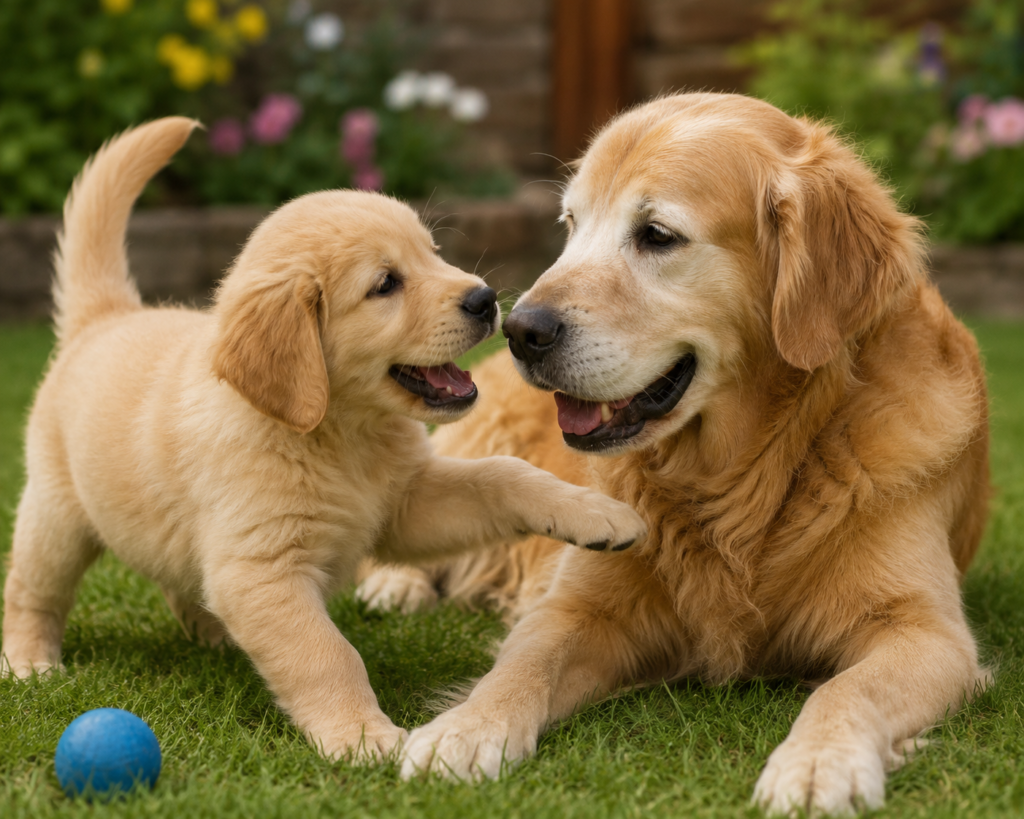
Puppies explore the world with their mouths.
While biting and nipping are normal behaviors, they should be redirected appropriately.
When your puppy bites:
- Stop play immediately
- Redirect attention to a chew toy
- Praise appropriate chewing
- Remain calm and consistent
Avoid rough play that encourages biting.
Most puppies naturally outgrow excessive nipping when guided properly.
Preventing Destructive Chewing
Chewing is a normal puppy behavior, especially during teething.
Provide a variety of safe chew toys and rotate them regularly to maintain interest.
If your puppy begins chewing something inappropriate:
- Interrupt calmly
- Offer an approved toy
- Praise the correct choice
Consistency helps puppies learn what belongs to them and what does not.
Crate Training Your Puppy
When used correctly, a crate can become a valuable training tool.
Many puppies view their crate as a safe den where they can relax and rest.
To introduce a crate:
- Place comfortable bedding inside
- Allow voluntary exploration
- Use treats and praise
- Feed meals near or inside the crate
- Never use the crate as punishment
A positive introduction helps your puppy develop confidence and security.
Leash Training Your Puppy
Leash training should start early.
Start by allowing your puppy to wear a collar and leash indoors for short periods.
Keep early sessions relaxed and enjoyable.
Reward your puppy for:
- Walking beside you
- Paying attention to you
- Remaining calm
Avoid pulling or dragging your puppy. Encourage desired behavior through patience and positive reinforcement.
Preventing Separation Anxiety
Many puppy owners unintentionally create overly dependent dogs.
Teaching your puppy to feel comfortable alone is an important life skill.
Gradually introduce short periods of separation.
Provide:
- Safe chew toys
- Comfortable resting areas
- Mental stimulation
Keep departures and arrivals calm.
If you’d like more detailed advice, be sure to read my article on helping dogs with separation anxiety.
The Power of Positive Reinforcement
Positive reinforcement remains one of the most effective training methods available.
When your puppy performs a desired behavior:
- Offer praise
- Give treats
- Use toys or play
- Provide affection
Dogs repeat behaviors that produce positive outcomes.
Training based on trust and rewards strengthens the bond between you and your puppy while making learning enjoyable.
Common Puppy Training Mistakes
Many new owners make mistakes that can slow progress.
Common errors include:
- Inconsistent rules
- Expecting too much too soon
- Long training sessions
- Punishing accidents
- Skipping socialization
- Lack of patience
Remember that your puppy is learning an entirely new way of life.
Small daily improvements eventually become lasting habits.
Final Thoughts
Training a puppy requires time, patience, and commitment, but the rewards are enormous.
Every training session strengthens the relationship between you and your dog. As your puppy learns good manners and develops confidence, you’ll begin to see the loyal companion you are helping to shape.
Focus on consistency rather than perfection. Celebrate small victories and enjoy the journey.
The effort you invest today will help create a happy, confident, and well-behaved dog that will share your life for many wonderful years.
This post contains Affiliate Links. If you purchase through these links I may earn a small commission
Additional Reading:
This guide was really helpful for me as I’m preparing to bring home a new puppy for my gradeschooler. I want the experience to be fun and positive for both of them, and I appreciate the emphasis on building trust and consistency rather than control.
One area I’m especially curious about is leash training. How do you keep those first walks from turning into a tug-of-war, especially with an energetic puppy who just wants to explore everything?
Thank you for your kind comment! Leash training can definitely feel like a tug-of-war at first.
I’ve found that starting in a quiet area and rewarding your puppy whenever they walk calmly beside you works wonders. Keep early walks short, be patient, and let your puppy explore a little while gently encouraging them back to your side.
Consistency and positive reinforcement will help them learn that walking nicely on a leash is rewarding and fun. ????
You are right. The more training you put into your puppy while it is young, the more well adjusted and well behaved the dog will be as it gets older. Put in the time and effort while the dog is young to avoid life time bad habits.
We made the mistake of not socializing our last puppy and it grew up hating other dogs and would be a nightmare to walk if other dogs where around. There was nothing we could do as it refused to befriend other dogs. It only liked our cat.
If you don’t get training done when the dog is young, is there any hope of getting it right when they are older?
Thank you for sharing your experience. Socialization really does play a huge role in helping puppies become confident around other dogs and new situations. The good news is that older dogs can still learn and improve, although it often takes more patience and gradual training than it does with puppies. Positive reinforcement, controlled introductions, and consistency can make a big difference. While some dogs may never become social butterflies, many can learn to feel more comfortable and manageable around other dogs with the right approach.
Kind regards Tim.
I liked this article as a fellow dog lover because this guide offers practical advice on raising a well-behaved puppy, highlighting the importance of positive reinforcement, consistency, and early socialization to build trust. It emphasizes patience during house training and crate training, and the need to manage behavioral stages like teething through safe redirection. The article also encourages creating a secure environment and using consistent, short training sessions for effective learning.I enjoyed reading all of this because I “inherited” a 3 month old pup who is now 3 yrs old and never knew any of the intricacies discussed in this read.Great article and info,thanks heaps friend!
Thank you for your comments, Billy. Good luck with your life with your “inheritance”
Kind regards Tim
This was a solid, beginner-friendly guide, and I like that it keeps returning to patience, consistency, and positive reinforcement rather than punishment. That approach aligns with common crate-training guidance, which emphasizes building positive associations, rewarding calm behavior, and never using the crate as punishment.
One question I had was how you’d adjust this advice for puppies with very different temperaments, since a bold, food-motivated pup often learns differently from a shy or easily overstimulated one. I’d also be interested in your take on socialization boundaries, especially how owners can expose puppies to new people, sounds, and places without pushing them past their comfort zone.
Thanks so much for your thoughtful comment! I completely agree—every puppy learns at its own pace, so it’s important to adapt your approach to their personality. Gentle, positive socialization builds confidence far better than rushing them into unfamiliar situations.