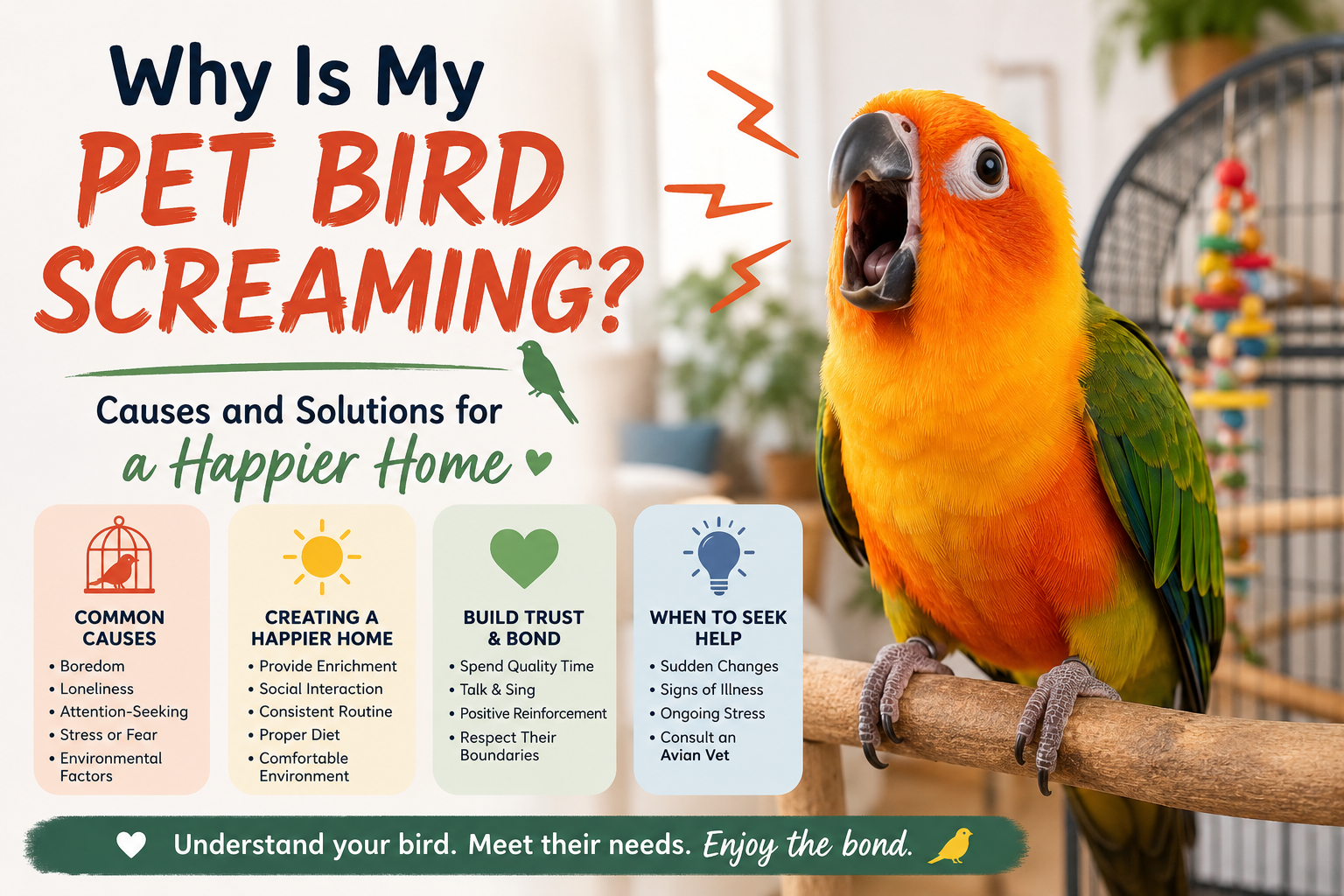
One of the most common questions new bird owners ask is, “Why is my pet bird screaming?” While birds are naturally vocal animals, excessive screaming can be frustrating and concerning. Fortunately, understanding the reasons behind your bird’s behavior is the first step toward finding a solution.
Birds use vocalizations to communicate their needs, emotions, and reactions to their environment. A screaming bird is often trying to tell you something important. Whether your feathered friend is seeking attention, feeling bored, stressed, or experiencing a health problem, identifying the cause can help restore peace and harmony to your home.
Let’s explore the most common reasons birds scream and what you can do about it.
Understanding Normal Bird Vocalizations
Before addressing screaming, it’s important to understand that birds are naturally noisy creatures.
In the wild, birds call to:
Communicate with flock members
Establish territory
Signal danger
Seek companionship
Express excitement
Many species, especially parrots, cockatiels, conures, and budgies, can be quite vocal during certain times of the day. Morning and evening vocalizations are often completely normal.
The key is distinguishing between normal communication and excessive screaming.
1. Your Bird Wants Attention
Birds are highly social animals. In the wild, they spend much of their time interacting with flock members.
If your bird feels ignored, it may scream simply to get your attention.
Signs
Screaming stops when you enter the room
Bird becomes quiet when spoken to
Vocalizations increase when left alone
Solution
Schedule regular interaction throughout the day.
Try:
Talking to your bird
Training sessions
Supervised out-of-cage time
Interactive toys
Avoid rushing to your bird every time it screams, as this can accidentally reward the behavior.
Birds often hide illness until they become seriously unwell.
Excessive screaming can occasionally indicate pain or discomfort.
Warning Signs
Fluffed feathers
Reduced appetite
Lethargy
Changes in droppings
Breathing difficulties
Solution
If screaming is sudden, persistent, or accompanied by other symptoms, consult an avian veterinarian promptly.
Never assume a medical issue is purely behavioral.
How to Reduce Excessive Bird Screaming
The most effective approach is addressing the underlying cause.
Do:
✔ Provide daily interaction
✔ Offer enrichment and foraging opportunities
✔ Maintain a consistent routine
✔ Reward quiet behavior
✔ Ensure proper sleep
✔ Schedule regular health checks
Don’t:
✘ Yell back at your bird
✘ Punish screaming
✘ Cover the cage excessively
✘ Reward screaming with immediate attention
✘ Ignore possible medical concerns
Consistency and patience are essential.
Creating a Happier, Quieter Bird
A happy bird is usually a quieter bird.
Meeting your bird’s physical, emotional, and mental needs can significantly reduce excessive vocalizations. Remember that some level of noise is perfectly normal. The goal is not silence but healthy communication.
By observing your bird carefully and responding appropriately, you can strengthen your bond while creating a more peaceful environment for everyone in your household.
Frequently Asked Questions
Is it normal for birds to scream every day?
Yes. Most birds vocalize daily, especially during morning and evening hours. Excessive or prolonged screaming may indicate a problem that needs attention.
Should I ignore my bird when it screams?
You should avoid rewarding screaming with immediate attention, but you should still investigate the possible cause.
What bird species are the loudest?
Many parrots, conures, cockatoos, and macaws are known for their loud vocalizations.
Can birds be trained to be quieter?
Yes. Positive reinforcement, enrichment, and addressing underlying causes can reduce excessive screaming over time.
When should I see a veterinarian?
Seek veterinary advice if screaming begins suddenly, becomes excessive, or is accompanied by signs of illness.
Final Thoughts
If you’ve ever wondered, “Why is my pet bird screaming?” the answer is usually found in your bird’s environment, emotional needs, or daily routine. By understanding the cause and responding thoughtfully, you can help your feathered companion feel safe, engaged, and content.
Remember, your bird isn’t trying to be difficult—it is simply communicating in the only way it knows how. With patience, consistency, and proper care, excessive screaming can often be greatly reduced, leading to a happier life for both you and your bird.
6 thoughts on “Why Is My Pet Bird Screaming? Causes And Solutions.”
My teenage son has a pet bird that often screams, and it can be quite a challenge for the whole household. I know birds are naturally vocal, but sometimes it feels like he’s just screaming for attention, especially when my son is busy with schoolwork or hanging out in another room. Reading about the different causes, like boredom, stress, or even hormonal changes, makes me realize there’s more to it than just “bad behavior.”
What’s the most effective way for a teenager to balance giving his bird enough attention while also encouraging independence, so the bird doesn’t scream every time he steps away?
Thank you for sharing your experience. It really does sound like your bird has formed a strong bond with your son. A good approach is to spend regular, quality time together each day while also encouraging independent play with safe toys, foraging activities, and a stimulating cage environment. It’s also important not to rush back every time the bird screams, as that can unintentionally reward the behavior. Instead, reward calm, quiet moments with attention and praise. With patience and consistency, most birds learn that they don’t need to scream to feel secure.
The part about normal morning and evening vocalizations made a lot of sense to me, because I think many new bird owners expect a pet bird to be quiet most of the day, and then they panic when the bird is simply acting like a bird. At the same time, it can be hard to know when the noise has crossed the line into stress, boredom, or a routine problem. I also found the point about household changes interesting, like moving furniture or having visitors. How long would you usually give a bird to adjust after a change in the room before deciding the screaming needs a different solution?
You’re absolutely right—some morning and evening vocalizing is perfectly normal for most birds. After a change in their environment, I’d usually allow a week or two for them to settle, provided they’re otherwise eating, playing, and behaving normally. If the screaming continues beyond that or is accompanied by signs of stress, it’s worth looking more closely at the possible cause.
I really liked your advice about not rushing over every time the bird screams, since it’s so easy to accidentally reward that exact behavior just by trying to quiet them down. I’ve been trying to practice this myself, but I always get stuck wondering when I should actually step in if the noise gets really intense versus just letting it run its course.
How would you recommend figuring out if they’re just fishing for attention versus actually feeling stressed or scared? I feel like reading their body language during those loud moments is the hardest part, and I’m never quite sure which signs to watch for first.
Thank you for your thoughtful comment! You’re absolutely right—reading the whole picture is the key. If your bird appears relaxed, is eating, playing, and otherwise behaving normally, it’s often attention-seeking. But if you notice signs like fluffed feathers, pacing, loss of appetite, or obvious fear, it’s worth investigating the cause. Over time, you’ll get to know your bird’s unique signals, which makes it much easier to tell the difference.

My teenage son has a pet bird that often screams, and it can be quite a challenge for the whole household. I know birds are naturally vocal, but sometimes it feels like he’s just screaming for attention, especially when my son is busy with schoolwork or hanging out in another room. Reading about the different causes, like boredom, stress, or even hormonal changes, makes me realize there’s more to it than just “bad behavior.”
What’s the most effective way for a teenager to balance giving his bird enough attention while also encouraging independence, so the bird doesn’t scream every time he steps away?
Thank you for sharing your experience. It really does sound like your bird has formed a strong bond with your son. A good approach is to spend regular, quality time together each day while also encouraging independent play with safe toys, foraging activities, and a stimulating cage environment. It’s also important not to rush back every time the bird screams, as that can unintentionally reward the behavior. Instead, reward calm, quiet moments with attention and praise. With patience and consistency, most birds learn that they don’t need to scream to feel secure.
Kind egards Tim
The part about normal morning and evening vocalizations made a lot of sense to me, because I think many new bird owners expect a pet bird to be quiet most of the day, and then they panic when the bird is simply acting like a bird. At the same time, it can be hard to know when the noise has crossed the line into stress, boredom, or a routine problem. I also found the point about household changes interesting, like moving furniture or having visitors. How long would you usually give a bird to adjust after a change in the room before deciding the screaming needs a different solution?
Thank you for your thoughtful comment!
You’re absolutely right—some morning and evening vocalizing is perfectly normal for most birds. After a change in their environment, I’d usually allow a week or two for them to settle, provided they’re otherwise eating, playing, and behaving normally. If the screaming continues beyond that or is accompanied by signs of stress, it’s worth looking more closely at the possible cause.
Thanks again for sharing your insights! Tim
I really liked your advice about not rushing over every time the bird screams, since it’s so easy to accidentally reward that exact behavior just by trying to quiet them down. I’ve been trying to practice this myself, but I always get stuck wondering when I should actually step in if the noise gets really intense versus just letting it run its course.
How would you recommend figuring out if they’re just fishing for attention versus actually feeling stressed or scared? I feel like reading their body language during those loud moments is the hardest part, and I’m never quite sure which signs to watch for first.
Thank you for your thoughtful comment! You’re absolutely right—reading the whole picture is the key. If your bird appears relaxed, is eating, playing, and otherwise behaving normally, it’s often attention-seeking. But if you notice signs like fluffed feathers, pacing, loss of appetite, or obvious fear, it’s worth investigating the cause. Over time, you’ll get to know your bird’s unique signals, which makes it much easier to tell the difference.
Approve and Reply Approve Disapprove EditReply as Tim
Approve & Publish Cancel