
Few things are more heartbreaking than seeing your dog panic when you leave the house. The barking, whining, destructive chewing, pacing, or sad eyes at the door can leave any dog owner feeling guilty and overwhelmed.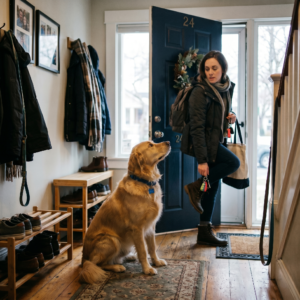
I understand this struggle personally. Dogs become deeply attached to the people they love, and when they suddenly find themselves alone, some simply do not know how to cope. The good news is that separation anxiety in dogs can often be improved with patience, consistency, and the right training approach.
In this guide, I’ll walk you through the signs of separation anxiety, what causes it, and the practical steps you can take to help your dog feel calmer, safer, and more confident when left alone.
What Is Separation Anxiety In Dogs?
Separation anxiety happens when a dog becomes extremely stressed whenever their owner leaves or is out of sight for long periods. While many dogs may miss their owners a little, dogs with true separation anxiety experience genuine panic and emotional distress.
This condition can affect dogs of all breeds and ages. Rescue dogs and puppies often struggle the most, but even older dogs can suddenly develop anxiety after major life changes.
Common triggers include:
- Moving to a new home
- Changes in routine
- Being left alone for longer periods
- Loss of a family member or another pet
- Owners returning to work after spending lots of time at home
Signs Your Dog May Have Separation Anxiety
Some dogs show very obvious symptoms, while others display more subtle signs.
Common symptoms include:
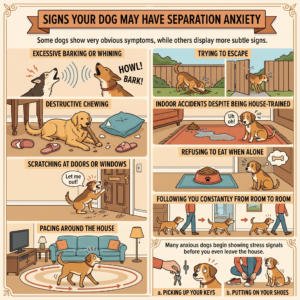
- Excessive barking or whining
- Destructive chewing
- Scratching at doors or windows
- Pacing around the house
- Trying to escape
- Indoor accidents despite being house-trained
- Refusing to eat when alone
- Following you constantly from room to room
Many anxious dogs begin showing stress signals before you even leave the house. Picking up your keys or putting on your shoes may trigger nervous behavior.
Why Dogs Develop Separation Anxiety
Dogs are naturally social animals. In the wild, they live in groups and rarely spend long periods completely alone. Some dogs adjust well to modern home life, while others become emotionally dependent on their owners.
Lack Of Confidence
Many anxious dogs simply lack confidence. They do not feel secure when left by themselves and rely heavily on their owner for comfort.
Sudden Routine Changes
A sudden change in schedule can confuse dogs. For example, if someone worked from home for months and then returned to the office, the dog may struggle to adapt.
Rescue And Rehoming History
Rescue dogs sometimes carry emotional trauma from abandonment or instability. They may fear being left behind again.
Over-Attachment
Sometimes owners unknowingly encourage clingy behavior by giving constant attention without teaching the dog how to relax independently.
Common Mistakes Dog Owners Make
One of the biggest mistakes is punishing the dog for anxiety-related behavior. Your dog is not being “bad” — they are feeling stressed and frightened.
Punishment often increases fear and can make the problem worse.
Other common mistakes include:
- Making emotional goodbyes
- Creating excitement when returning home
- Leaving anxious dogs without mental stimulation
- Expecting improvement too quickly
- Using inconsistent training methods
Helping an anxious dog requires calm leadership and patience.
How To Calm A Dog With Separation Anxiety
Start With Short Departures
Begin by leaving your dog alone for only a few minutes at a time. Slowly increase the duration as your dog becomes more comfortable.
The goal is to teach your dog that you always return.
Avoid Dramatic Goodbyes
Keep departures calm and relaxed. Long emotional farewells can increase anxiety.
Simply leave quietly and confidently.
Create A Safe Space
Many dogs feel safer when they have a comfortable area of their own.
Include:
- A cozy bed
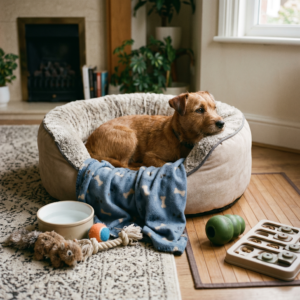
- Favorite toy
- Water
- a Cosy Blanket
- Puzzle feeders or chew toys
Soft background music or television can also help some dogs feel less alone.
Mental Stimulation Helps Greatly
A bored dog often becomes a stressed dog.
Mental stimulation can reduce anxiety levels by giving your dog something positive to focus on.
Helpful activities include:
- Puzzle toys
- Snuffle mats
- Treat-dispensing toys
- Short obedience sessions
- Scent games
- Daily walks
A mentally satisfied dog is usually calmer overall.
Exercise Before Leaving
Dogs with pent-up energy often struggle more when left alone. 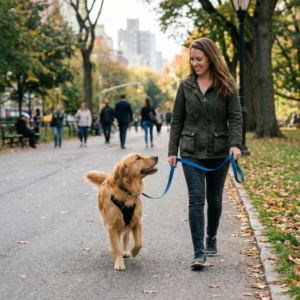
A good walk, light play session, or training session before you leave can help your dog relax and rest afterward.
Even 20 to 30 minutes of exercise can make a noticeable difference.
Regular walks and leash training sessions can help reduce nervous energy and improve confidence.
Should You Use A Crate?
Crates help some dogs feel secure, but they can worsen anxiety in others.
Never force a highly anxious dog into a crate for long periods. If using crate training, introduce it slowly and positively so the crate becomes a safe, happy place rather than a punishment.
Helpful Products For Separation Anxiety
Some products may help support your training efforts:
- Calming dog beds
- Interactive toys
- Lick mats
- Slow feeders
- Anxiety wraps
- Calming chews
- White noise machines
These tools work best alongside consistent training rather than as a complete solution on their own.
Can Separation Anxiety In Dogs Be Cured?
Many dogs improve dramatically with patience and consistent training. Severe cases may require help from a professional dog trainer or veterinarian, especially if the anxiety is extreme.
The important thing is not to lose hope.
Progress may happen slowly, but small improvements add up over time. Many anxious dogs eventually learn to relax and feel safe when left alone.
Final Thoughts
Living with a dog that suffers from separation anxiety can be emotionally exhausting, but you are certainly not alone. With understanding, structure, and calm training, most dogs can learn to feel more confident and secure.
Remember that your dog is not trying to frustrate you. They are simply struggling with fear and uncertainty.
Patience, kindness, and consistency truly make all the difference.
Frequently Asked Questions
How long does it take to fix separation anxiety in dogs?
Every dog is different. Mild cases may improve within a few weeks, while severe anxiety can take several months of gradual training.
Should I ignore my dog when I come home?
You do not need to ignore your dog completely, but keeping greetings calm and low-key can help reduce emotional dependency.
Do certain dog breeds get separation anxiety more often?
Some highly social breeds, such as Labrador Retrievers, Border Collies, and German Shepherds, may be more prone to anxiety if left alone too often.
Can puppies develop separation anxiety?
Yes. Puppies can become overly dependent if they are never taught how to feel comfortable spending short periods alone.
Should I get another dog to help?
Sometimes companionship helps, but another dog is not always a cure. Some anxious dogs still panic even when another pet is present.
This post contains affiliate Links. If you make a purchase through these Amazon links I may earn a small commission