
If you are reading this, you are probably deciding whether to trust the advice on this site. That is a fair thing to check, so here is who the site is for, what it stands for, and how it handles recommendations. The short version: it teaches pet behavior through positive reinforcement, which means rewarding what your pet does right instead of punishing what it does wrong. It is written for anyone who wants to understand their pet better and build a closer relationship with it.
Listening before controlling
Most people come to behavior help with a complaint: the dog pulls, the cat scratches the sofa, the parrot screams at dusk. The natural first question is “how do I make it stop?” Positive reinforcement training starts from a different one: “what is my pet trying to tell me, and what do I want it to do instead?”
That shift changes what you pay attention to. A dog that jumps on guests is greeting them with the only move it knows. A cat that swats during petting is often giving a signal that went unnoticed a few seconds earlier. A bird that bites may be reacting to something specific in how it was approached. Once you read behavior as communication, you stop treating your pet as a problem to manage and start treating it as someone to understand.

What positive reinforcement changes
Positive reinforcement means giving your pet something it values, such as a treat, praise, a toy or a favorite activity, right after it does what you want. Behavior that pays off gets repeated. Timing matters a great deal: the reward has to arrive within a moment or two of the behavior, or your pet will not connect the two.
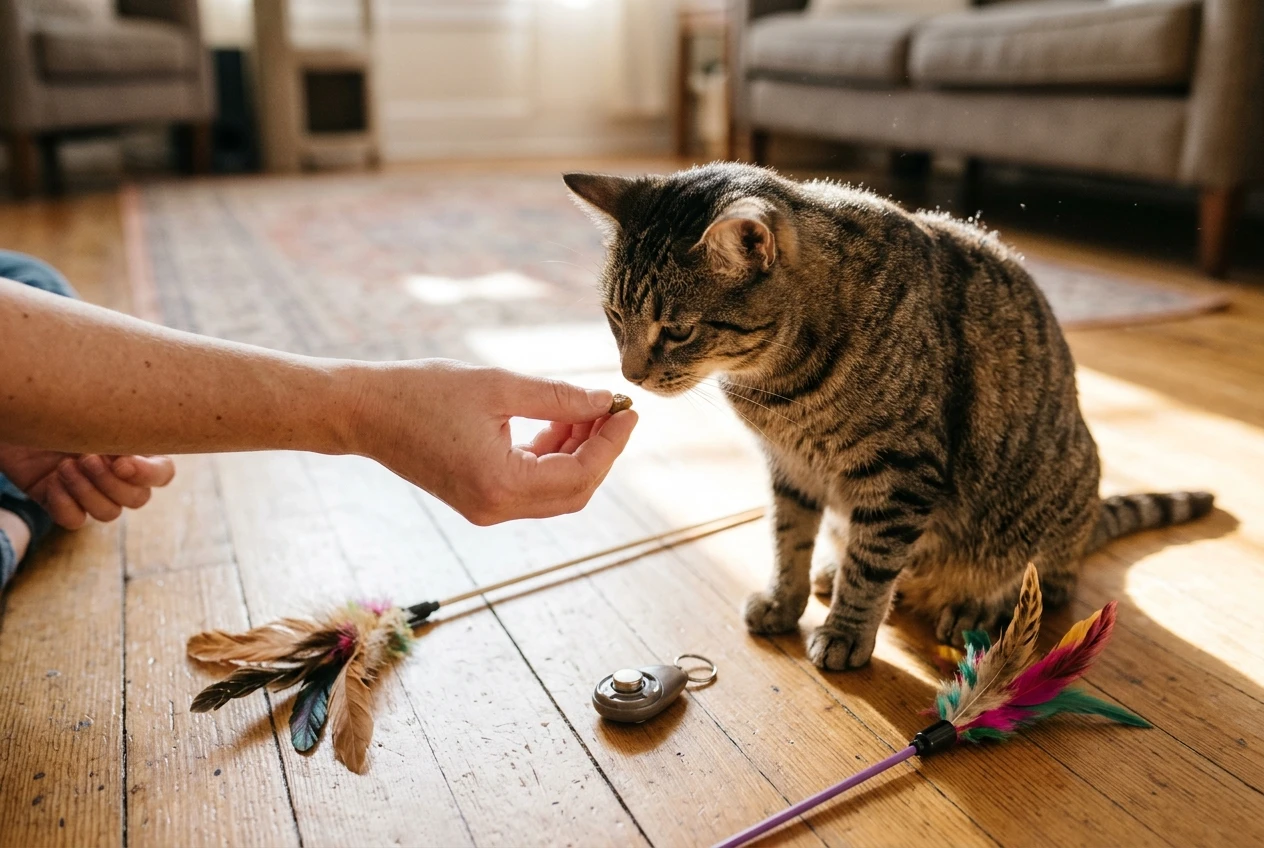
The practical effects show up quickly in how training feels for both sides:
- Your pet learns what to do, instead of only learning what to avoid.
- Training sessions become something your pet chooses to join, not something it endures.
- Fearful or sensitive animals are not pushed into more stress, which makes them easier to teach.
- You get better at noticing small good behavior, and you have more reasons to praise than to scold.
Correction-based methods tend to teach an animal to hide its signals, and a pet that has stopped growling or hissing has not become calmer. It has only become harder to read. Reward-based training keeps the lines of communication open, and that is where a deeper bond comes from.
What this site believes about pets
A few convictions shape everything published here, stated plainly:
- Pets behave the way they do for reasons, and those reasons are usually findable.
- Dogs, cats and birds all learn through consequences, and rewarding the right behavior is the clearest consequence you can give.
- Patience and consistency work better than force, and they cost your relationship nothing.
- Every pet is an individual. A method that suits a confident Labrador may need changing for a nervous rescue or a young cockatiel.
- Caring for a pet includes meeting its needs for exercise, stimulation and rest, and many “behavior problems” ease once those needs are met. The article on signs your pet is bored covers this in detail.
What you’ll find here
The site covers the animals most households keep and the everyday puzzles that come with them.

Dogs. Puppy basics, leash manners, jumping, anxiety, socialization and building trust. Articles include a puppy training guide and a calm, step-by-step guide to stopping leash pulling.
Cats. Body language, the bond between cats and their people, and habits like territorial marking. The guide to cat body language is a good place to learn what your cat is already telling you.
Birds. Cage setup, daily care, biting, screaming and basic training, for parrots and other pet birds.
Everyday puzzles. Boredom, enrichment on a budget, and the responsibilities that come with having a pet.
How recommendations are chosen
Some pages on this site recommend training courses and tools, and some of those links are affiliate links. That means the site may earn a commission if you buy through them, at no extra cost to you. Because that creates an obvious incentive, you should know what to look for in any recommendation, here or elsewhere.
A good course or tool is built on reward-based methods and does not rely on fear, pain or intimidation. It explains why a technique works, not only what to do. It fits the pet in front of you, and it is honest about what it cannot do. Any review here should be read with those questions in mind, including the K9 Training Institute review. If a product would not meet them, it does not belong on this site, however well it pays.
Where to begin
Pick the situation closest to yours:
- A dog that is anxious when left alone: read about helping a dog with separation anxiety.
- A cat you want to understand better: try understanding cat behaviour.
- A bird that bites: start with why pet birds bite and how to prevent it.
- A new pet of any kind: the guide to the responsibilities of a pet owner sets out what your pet needs from you every day.
Say hello and tell me about your pet
Your pet’s species, age, habits and the one behavior that puzzles you most are the best starting point for what gets written next. If something in your own home is not covered yet, say so, because the articles here are written for the questions pet owners actually have.
The best place to start is Your Pet’s Behavior, Explained: Start Here, which lays out how pet behavior works and how to read it. And if you want to know exactly how recommendations and affiliate links work on this site, the Affiliate Disclosure page spells it out.