
🐾 Introduction
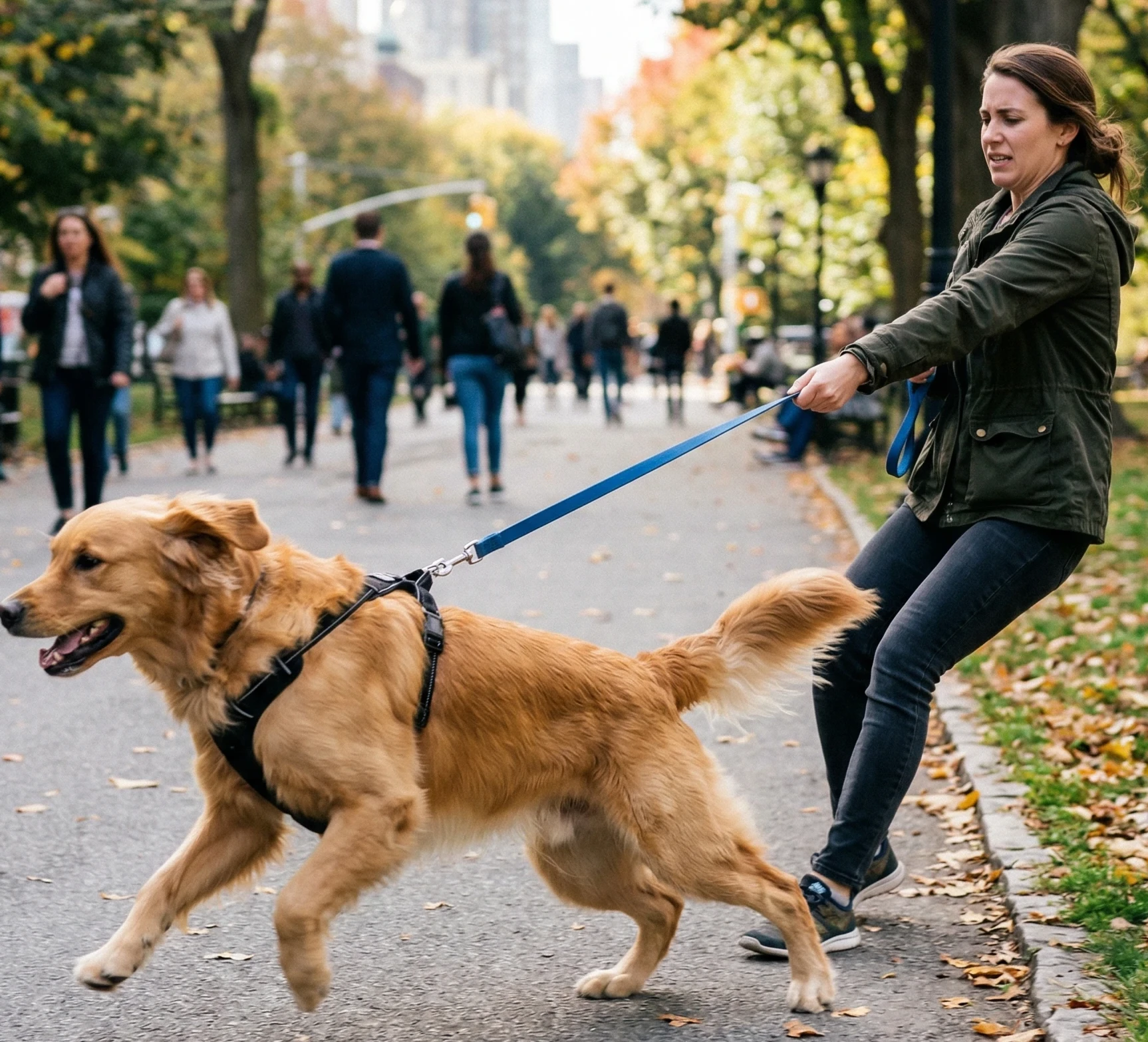
Walking your dog should be one of the most enjoyable parts of your day… not a battle of strength.
If your dog constantly pulls on the leash, lunges ahead, or drags you down the street, you’re not alone. Many dog owners struggle with this — and it can turn a simple walk into a stressful experience.
The good news? Leash pulling is a trainable behavior, not a permanent problem.
In this guide, I’ll walk you through why dogs pull on the leash, and more importantly, how to train your dog to walk calmly by your side using simple, proven techniques.
🔍 Why Do Dogs Pull on the Leash?
Understanding the cause is the first step to fixing it.
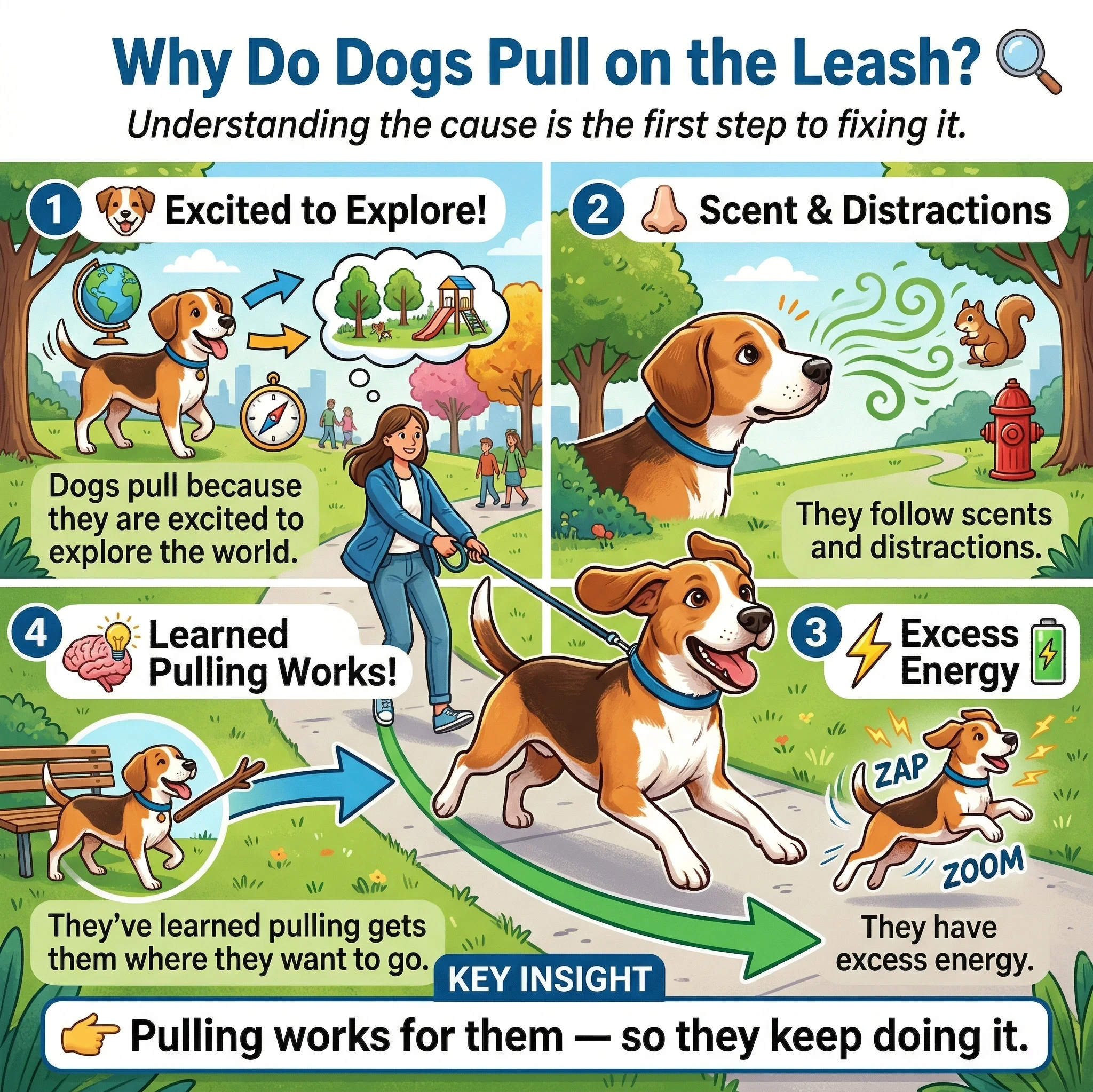
Dogs pull because:
- 🐕 They’re excited to explore the world
- 👃 They follow scents and distractions
- ⚡ They have excess energy
- 🧠 They’ve learned pulling gets them where they want to go
👉 Here’s the key insight:
Pulling works for them — so they keep doing it.
Your job is to gently teach them that calm walking works better.
🛠️ Step-by-Step: How to Stop Leash Pulling
1. Stop Moving When the Leash Tightens
This is the foundation of loose leash walking.
- The moment your dog pulls → stop walking immediately
- Stand still and say nothing
- Wait until the leash loosens
👉 Movement = reward
👉 No movement = no reward
Consistency here changes everything.
2. Reward Calm Walking
The moment your dog walks beside you without pulling:
- Praise calmly
- Offer a small treat
- Keep walking
You are teaching:
“This is the behavior that gets you forward.”
3. Change Direction (The “Follow Me” Method)
If your dog keeps pulling:
- Turn and walk in the opposite direction
- Encourage them to follow
- Reward when they catch up
This builds attention and focus on you.
4. Use Short, Structured Walks for Training
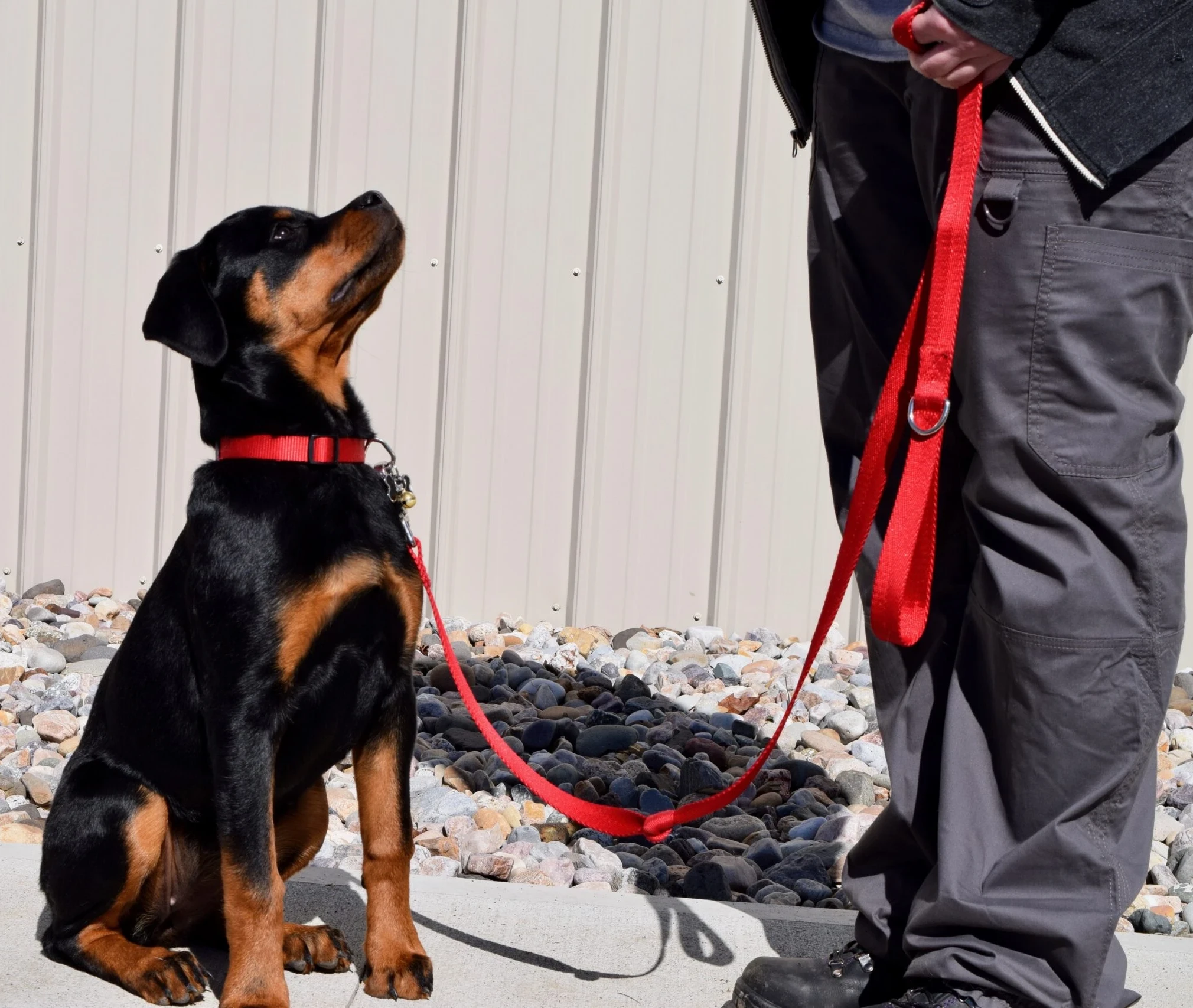
Don’t expect perfect behavior on long walks right away.
Start with:
- Short sessions (5–10 minutes)
- Low-distraction environments
- Gradually increase difficulty
👉 Think training first, walking second.
5. Burn Off Energy Before the Walk
A high-energy dog is much harder to control.
Before walking:
- Play fetch
- Do a quick training session
- Let them release excess energy
👉 A calmer dog learns faster.
6. Choose the Right Equipment
The right tools can make a big difference.
Consider:
- 🐾 Front-clip harness (reduces pulling power)
- 🐾 Standard leash (avoid retractable for training)
Avoid harsh tools — they often create fear, not learning.
⚠️ Common Mistakes to Avoid
- ❌ Letting your dog pull “just this once”
- ❌ Using inconsistent commands
- ❌ Expecting instant results
- ❌ Relying only on equipment without training
👉 Consistency beats everything.
🧠 How This Connects to Obedience Training
Leash pulling isn’t just about walking — it’s about focus, impulse control, and communication.
If your dog struggles on the leash, they may also struggle in other areas.
👉 That’s why building a strong training foundation is so important.
For a complete system, see my guide:
Dog Obedience Training Methods: My Personal Guide to a Happier, Well-Behaved Dog
🐶 Puppy vs Adult Dogs: Does It Matter?
Good news — both can learn!
- 🐕 Puppies learn faster but need patience
- 🐕🦺 Adult dogs may take longer but absolutely can improve
👉 It’s never too late to teach calm leash walking.
🐾 Final Thoughts
Stopping leash pulling doesn’t require strength — it requires consistency, patience, and clear communication.
Every calm step your dog takes is progress.
Stick with it, stay calm, and before long, your walks will become something you both genuinely enjoy again.